



Tea Caddies, Caskets and Campaign Boxes: A Collector's Guide
The Beauty of Utility: Understanding Antique Boxes, Caddies and Caskets
In the world of antiques, few objects encapsulate the intersection of utility, artistry, and social history as perfectly as the small, decorative box. More than mere containers, these pieces are intricate works of miniature architecture, reflecting the tastes, trade routes, and technologies of their time. As a dealer, I have always been captivated by their ability to tell a grand story on an intimate scale. Understanding their original purpose is the first step towards true connoisseurship.
- The Tea Caddy: In the 18th century, tea was a commodity of immense value, often kept under lock and key. The tea caddy was therefore not just a container but a safe, a small, fortified chest designed to protect precious leaves from theft. Its presence in a drawing room was a clear signal of wealth and access to global trade.
- The Casket: The term ‘casket’ typically refers to a more personal and often more ornate box, intended for the safekeeping of jewellery, important documents, or cherished letters. These were the private repositories of the elite, designed to be both secure and beautiful.
- The Box: This broader term encompasses a vast range of forms, from travelling writing slopes and apothecary cases to simple document boxes and campaign chests designed for military officers on the move.
What unites these objects is their evolution from purely functional items to objets de luxe. The finest examples demonstrate complex joinery, exotic veneers, and elaborate inlays, transforming a simple form into a canvas for extraordinary craftsmanship. They were statements of refinement, placed strategically on an antique centre table or mantelpiece to be admired as much as used.
The Evolution of the Tea Caddy
The story of the tea caddy is inextricably linked to the story of tea itself. As this new beverage from the East captured the imagination of 18th-century Britain, its astronomical price demanded secure storage. Early caddies were often crafted from silver or fine woods like mahogany, featuring robust locks. The most sought-after examples, however, were the exotic export versions, fashioned in China from materials like porcelain or lacquer, or in India from intricately carved ivory and sandalwood, arriving in Europe as treasures of the East India Company trade.
Caskets and Cose: Secure Storage for the Elite
Within the grand country house, the jewellery casket held a place of particular importance. It was a private world, a keeper of heirlooms and intimate treasures. The tradition of the ornate strongbox reached its zenith with pieces like the 17th-century Italian cabinet, a veritable fortress of marquetry and secret compartments, designed to protect the most valuable possessions of a noble family. These were not merely boxes but pieces of furniture, symbols of dynastic power and wealth.
Materials and Artistry: A Dealer’s Secrets to Connoisseurship
For the discerning collector, the material of an antique box is its language. The choice of wood, veneer, or inlay speaks volumes about its origin, status, and the technical mastery of its maker. Over the years, I've learned that reading these materials is the key to understanding a piece's true quality and rarity.
- The Allure of Shagreen: One of the most prized materials of the 18th century, shagreen is the skin of a stingray. Its granular, pebbled texture, often dyed a vibrant green or other striking colour, was notoriously difficult to work with. Its use on apothecary cases or scientific instrument boxes denoted an object of the highest status.
- Hardstone and Pietra Dura: The use of inlaid semi-precious stones such as lapis lazuli, malachite, and carnelian is a technique known as pietra dura. Perfected by Florentine craftsmen, it was exceptionally costly and prestigious, transforming a casket into a piece of jewellery itself.
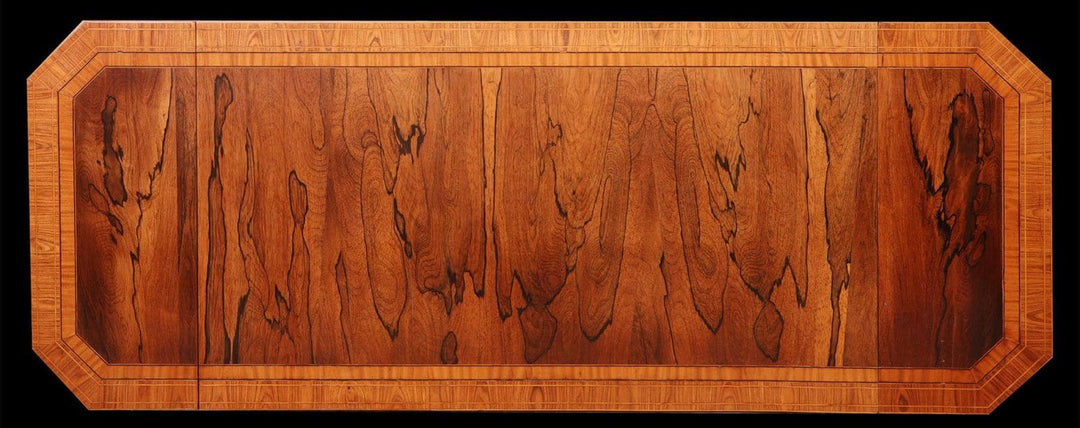
- Precious Woods: The cabinet-makers of the 18th and 19th centuries had an astonishing palette of woods at their disposal, thanks to global trade. Ebony from Africa and Asia, richly figured rosewood from South America, and coromandel from India were all used to create surfaces of breathtaking beauty and depth.
- Surface Patina: A dealer's most cherished quality. We look for what I call "the conservation of history"—the subtle colour, texture, and wear that a piece acquires over centuries. An original, untouched surface patina is infinitely more valuable than an over-restored, glossy finish that has erased the object's life story.
Identifying Authentic 18th-Century Surfaces
Dealer's Secret: One of the most crucial skills in our trade is distinguishing genuine, age-related wear from deliberate, modern distressing. Authentic wear is inconsistent and logical; you’ll see it on the edges where hands would have repeatedly lifted the lid, around the keyhole (the escutcheon), and on the feet. Modern distressing is often uniform and nonsensical, with scratches or dents in places that would never see regular contact. Furthermore, the original linings and fitted interiors of apothecary cases or writing boxes are vital indicators of authenticity and completeness, adding significantly to their value.
The Craft of Inlay and Marquetry
The technical skill required to create intricate inlay and marquetry on a small scale is astonishing. Consider the Mughal brass-inlaid rosewood caskets of the early 19th century. Each tiny piece of brass was cut by hand and set into the dense wood with breathtaking precision, creating complex geometric and floral patterns. This level of artistry is a testament to generations of skill and is a hallmark of the finest antique furniture and decorative arts of the period.
Selecting the Perfect Piece: Period Styles and Provenance
Navigating the various period styles is essential for any serious collector of antique boxes, caddies and caskets. Each era and region brought its own aesthetic, driven by trade, travel, and changing tastes. Understanding these stylistic shifts allows one to appreciate the unique character of each piece.
- Anglo-Indian and Mughal Art: The influence of the British East India trade on design cannot be overstated. Objects made in India for the European market, known as Anglo-Indian, combined local materials like sadeli mosaic, ivory, and sandalwood with familiar Western forms, resulting in a beautiful and exotic fusion.
- Regency Elegance: In early 19th-century England, the Regency style brought a refined, Neoclassical aesthetic. Boxes from this period often feature polished brass inlay, rich leather coverings with gilt-wood tooling, and clean, architectural lines that speak of restrained luxury.
- Renaissance and Baroque Revivals: The 19th century saw a great fascination with historical styles. Craftsmen created magnificent revivalist pieces, such as miniature cassone (marriage chests) in the Italian Renaissance style or heavily carved boxes that echoed the drama of the Baroque.
- Provenance: A documented history is the gold standard. A casket with a clear line of ownership, perhaps evidenced by a family crest, an old inventory label, or a mention in a will, possesses a narrative that elevates it beyond a mere object, significantly increasing its historical importance and market value.
Anglo-Indian and Export Masterpieces
A detailed examination of a piece like a c. 1760 Anglo-Indian tea caddy reveals a world of cross-cultural craftsmanship. Often made in Vizagapatam, these caddies feature intricate ivory veneers etched with ink, depicting local flora and fauna alongside English-style landscape scenes. They were the epitome of luxury souvenirs, tangible evidence of a connected global economy. Such pieces are a cornerstone of any serious collection of Indian works of art.
European Objects and the Grand Tour
For the wealthy 18th-century aristocrat embarking on the Grand Tour, small, precious boxes served as the most sophisticated of souvenirs. A damascened miniature cassone from Toledo, with its intricate inlay of gold and silver into steel, was a testament to Spain’s Moorish artistic heritage. These objects were not trinkets but scholarly acquisitions, chosen to reflect the traveller's worldliness and classical education, forming part of a wider collection of Grand Tour objects.
Highlights of the Collection: Investing in Exceptional Craftsmanship
As an online-only specialist, we are dedicated to sourcing and presenting the finest examples of antique boxes, caddies and caskets for a global clientele. Each piece is selected for its exceptional quality, rarity, and historical significance. We take great care to ensure our clients, whether in New York, California, or anywhere else in the world, can acquire these treasures with absolute confidence.
- The Museum-Grade Investment: A piece like a 17th-Century Italian Cabinet, valued at £58,000, represents the pinnacle of the form. Its complex architecture and precious materials make it a true investment piece, worthy of a museum collection.
- For the Specialist Collector: An Ottoman Hardstone & Gilt Tombak Casket at £9,500 appeals directly to connoisseurs of Islamic art, showcasing a distinct and highly refined aesthetic.
- Accessible High-End Collecting: A Regency Leather Fitted Table Top Casket, priced at £3,900, offers a superb entry point into the world of high-end English decorative arts, combining beautiful craftsmanship with practical elegance.
We understand the concerns of our American buyers. That is why we have perfected our international shipping process. Every item is professionally packed by fine art shippers and fully insured for its journey. We handle all logistics, ensuring a seamless and secure delivery directly to your door, whether you are in the Hamptons or San Francisco.
Standout Collectors’ Items
Among the most remarkable pieces are those that defy easy categorization. A Rare Mughal Rosewood & Brass Inlaid Jewellery Casket from the early 19th century, for instance, is a masterclass in precision and design. Similarly, a Mid 18th-Century Shagreen Apothecary Case is not just a beautiful object but a rare survival—a complete travelling medical kit that offers a fascinating glimpse into the life of a wealthy 18th-century individual.
Acquisition and International Care
We believe that these historical objects should be ready to be enjoyed. That is why every purchase from our collection includes our complimentary restoration policy, where our expert conservators ensure the piece is stable and sympathetically cared for before it leaves us. Our commitment is to the long-term preservation of these wonderful artefacts. We invite you to discover the history, beauty, and enduring value held within these miniature treasures.
Explore the full collection of Antique Boxes, Caddies and Caskets.
Frequently Asked Questions
- What were tea caddies used for in the 18th century?
- In the 18th century, tea was an extremely expensive imported luxury. Tea caddies were essentially small, lockable chests designed to secure the precious tea leaves from theft by household staff. They were also decorative status symbols, displayed prominently to signify the owner's wealth and social standing.
- What materials are most common in high-value antique boxes?
- High-value antique boxes are distinguished by their use of rare and difficult-to-work materials. These include exotic woods like coromandel, rosewood, and calamander; fine veneers of tortoiseshell; and shagreen (stingray skin). The most valuable examples often feature intricate inlays of brass, ivory, or semi-precious stones (pietra dura), such as lapis lazuli and malachite.
- How do I care for an antique box with a shagreen or tortoiseshell surface?
- These are delicate organic materials that require a stable environment. Avoid direct sunlight, extreme fluctuations in temperature or humidity, and modern cleaning products. Dust gently with a soft, dry cloth. For any significant cleaning or repair, it is essential to consult a professional conservator to avoid irreversible damage.
- Can these antique caskets be used in modern interior design?
- Absolutely. An antique casket or caddy can serve as a superb focal point in a modern interior. Placed on a console table, bookshelf, or chest of drawers, it adds a layer of history, texture, and character that contrasts beautifully with contemporary design. They can be used to store small items like remote controls, keys, or jewellery, blending timeless artistry with modern function.
- How can I be sure an antique box can be shipped safely from the UK to the United States?
- Reputable international dealers use specialist fine art shipping companies. At Nicholas Wells, we manage the entire process. Each item is professionally packed in custom crates, fully insured from our door to yours, and handled by experts in moving fragile, high-value objects. We have extensive experience shipping to clients across the United States, including major hubs like New York and California, ensuring a secure and seamless process.

Leave a comment