



The Connoisseur’s Guide to Antique Bookcases for English Homes: Style, History, and Acquisition
Could the acquisition of a single George III breakfront do more to define your home’s character than an entire suite of modern bespoke joinery? For the discerning collector, the search for authentic antique bookcases for English homes is often fraught with the quiet anxiety of encountering a 'married' piece or an over-restored reproduction that lacks a genuine soul. You understand that a library is more than a storage solution; it's a testament to a scholarly tradition that stretches back to the grand country houses of the 18th century.
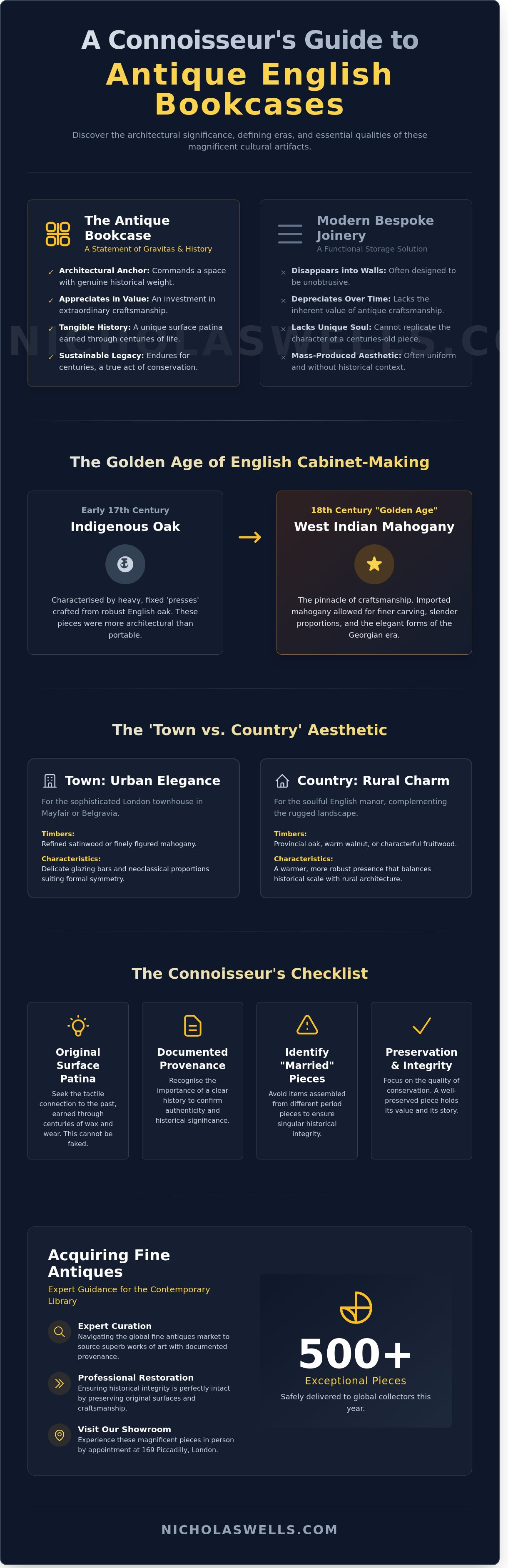
At Nicholas Wells Antiques, we share your reverence for these significant cultural artifacts and the extraordinary craftsmanship they represent. This guide offers the clarity you require to recognise documented provenance and the importance of preserving an original surface patina. From our showroom at 169 Piccadilly, we'll also detail how our professional restoration and international shipping services, which have safely delivered over 500 exceptional pieces to global collectors this year, ensure that these magnificent works of art arrive with their historical integrity perfectly intact.
Key Takeaways
- Understand how a significant library piece serves as an architectural anchor, defining the intellectual heart of a residence through the storied evolution of the English country house.
- Explore the transition from indigenous oak to rare West Indian mahogany during the 18th-century "Golden Age" of British cabinet-making to identify the pinnacle of craftsmanship.
- Learn to distinguish between breakfronts, secretaires, and revolving forms to select the most distinguished antique bookcases for English homes that meet the specific requirements of the modern bibliophile.
- Discover the essential criteria for evaluating quality, focusing on the preservation of original surface patina and the critical importance of identifying "married" pieces to ensure historical integrity.
- Gain expert guidance on navigating the global fine antiques market and the bespoke process of acquiring superb works of art through a premier London-based dealer.
The Architectural Significance of the Antique Bookcase in the English Home
The evolution of the library within the English country house represents more than a mere shift in storage; it marks the transformation of the home into a sanctuary of intellectual pursuit. During the 18th century, the library emerged as the social and scholarly heart of the estate, a room where the architecture itself was defined by the furniture it contained. A significant bookcase serves as a profound architectural anchor, grounding a room's design with its verticality and mass. While modern fitted joinery often disappears into the walls, a free-standing antique bookcase commands the space, offering a sense of gravitas that mass-produced cabinetry cannot replicate. This distinction is vital for those seeking antique bookcases for English homes that require a focal point of genuine historical weight.
Understanding the History of the Bookcase reveals a journey from the fixed, heavy presses seen in the Bodleian Library in 1602 to the refined, portable masterpieces of the Georgian era. Choosing a fine antique isn't just an aesthetic decision; it's an act of historical conservation. These pieces carry a unique surface patina, earned through centuries of wax and wear, that offers a tactile connection to the past. They represent a sustainable alternative to contemporary furniture, as a well-preserved George III mahogany breakfront, crafted circa 1780, possesses the structural integrity to endure for several more centuries. Unlike modern alternatives, these works of art appreciate with time, their value rooted in the extraordinary craftsmanship of the 18th and 19th centuries.
The 'Town vs. Country' Aesthetic
The choice of timber and silhouette often reflects the intended destination of the piece. Selecting antique bookcases for English homes requires an understanding of regional variations and the specific requirements of the architecture. For a sophisticated Mayfair or Belgravia townhouse, the refined elegance of satinwood or finely figured mahogany is essential. These pieces often feature delicate glazing bars and neoclassical proportions that suit the formal symmetry of London's grandest postcodes. In contrast, the rural English manor finds its soul in provincial oak, walnut, or fruitwood. These materials offer a warmth and robust charm that complements the rugged landscape outside. When selecting a piece, it's crucial to balance historical scale with ceiling heights. A three-meter tall library bookcase that flourished in a 19th-century drawing room must be measured with precision to ensure it doesn't overwhelm a contemporary interior with lower proportions.
Bookcases as Works of Art
A magnificent bookcase transcends its utilitarian origins to become a curated gallery. It's the perfect stage for displaying Grand Tour objects, where bronze figures and marble fragments find a sympathetic backdrop in aged timber. To enhance the presence of a particularly deep or dark piece, many connoisseurs choose to integrate subtle lighting or even antique mirrors within the shelving. This technique adds depth and reflects light back into the room, softening the piece's monumental feel. The psychological impact of a well-curated library in a luxury interior is profound; it creates an atmosphere of quiet reflection and scholarly prestige. We invite you to visit our antiques showroom by appointment at 169 Piccadilly to experience the extraordinary scale and soul of these unique antique surfaces in person.
Defining Eras of English Library Furniture: From Georgian Mahogany to Regency Elegance
The 18th century represents the undisputed pinnacle of English cabinet-making, a period often termed the Golden Age. During this era, the transition from indigenous English oak to imported West Indian mahogany, specifically from Jamaica and San Domingo, transformed the aesthetic of the library. This dense, dark timber allowed for finer carving and more slender proportions than previously possible. For those seeking historical context, the Victoria and Albert Museum's furniture collection provides an unparalleled overview of these material shifts. Master makers such as Gillows of Lancaster, established in 1728, began to define the standard for antique bookcases for English homes. Their work often reflected the neoclassical rigour of architects like Robert Adam, who introduced architectural symmetry and lighter, more refined proportions to domestic furniture, many examples of which we curate at our gallery at 169 Piccadilly.
The Georgian Masterpieces (1714–1837)
The Georgian era saw the perfection of the bureau bookcase, a multi-functional piece that combined a fall-front desk with glazed upper tiers. Thomas Chippendale’s 1754 publication, The Gentleman and Cabinet-Maker's Director, popularised specific hallmarks like intricate fretwork, swan-neck pediments, and ogee feet. Collectors prize Georgian mahogany for its exceptional density and the deep, lustrous patina developed over two centuries. These pieces aren't just storage; they're sculptural statements of 18th-century intellectualism. The surface patina on a 1760s breakfront is a living record of historical conservation.
Regency and William IV Sophistication
By 1810, the Regency style introduced a preference for exotic rosewood and delicate brass inlays, often inspired by boulle work. Designers shifted toward lower, open bookcases, drawing inspiration from French bibliothèque layouts. This period favoured architectural motifs including fluted pilasters and Egyptian-inspired sphinxes or lion-mask mounts. The aesthetic is one of crisp lines and technical precision, making these antique bookcases for English homes ideal for modern interiors where height might be restricted. The use of ormolu mounts during this time adds a layer of luxury antiques appeal that remains highly sought after in Mayfair galleries today.
Victorian Grandeur and Gothic Revival
The mid-19th century witnessed a return to solid oak, driven by Augustus Pugin’s Gothic Revival. This movement emphasised "honest" construction and medieval-inspired tracery. For the professional classes, the 'Barrister Bookcase' emerged as a modular innovation, while the industrial elite commissioned massive breakfronts to fill expansive country house libraries. These pieces often feature extraordinary carvings and original glass that ripples with age. Each piece tells a story of the era's burgeoning wealth and scholarly ambition. To explore these historical narratives, you may view our current selection of cabinet furniture or visit our London showroom by appointment.
Selecting the Ideal Form: Breakfronts, Secretaires, and Revolving Bookcases
The choice of form dictates how a piece interacts with the architectural soul of a room, transforming a mere storage solution into a profound statement of connoisseurship. For the primary library, the breakfront remains the undisputed sovereign of antique bookcases for English homes. Its defining characteristic is the projecting central section, which creates a rhythmic depth that prevents a large-scale piece from appearing monolithic or overbearing. When evaluating these grand structures, one should scrutinise the glazed doors; while 18th-century examples often feature delicate astragal bars in geometric patterns, later Regency pieces might showcase larger panes of hand-blown glass that offer a clearer view of the collection within. As seen in The Metropolitan Museum of Art's collection, these pieces often served as the structural anchor of a gentleman's study, requiring a dedicated focal wall to truly command the space.
The Majestic Breakfront Bookcase
A breakfront is defined by its stepped facade, where the central section projects forward from the wings. This architectural silhouette creates a play of light and shadow across the mahogany or satinwood surfaces, emphasizing the grain's natural beauty. Collectors often prefer George III examples for their restrained elegance and superb proportions. These pieces demand space; they're designed to be the heart of a room, often stretching over three metres in width. The surface patina on an untouched 18th-century breakfront provides a level of warmth that modern reproductions simply cannot replicate.
Bureaus and Secretaires: The Working Antique
The secretaire bookcase offers a sophisticated solution for the integrated home office, concealing a fully equipped writing surface behind a fall-front drawer or a hinged bureau slope. These 18th-century writing cabinets transition seamlessly into the 21st century, providing a dignified station for a laptop while maintaining the aesthetic integrity of a formal room. A fine antique desk often complements these larger cabinets, allowing for a layered workspace that celebrates historical craftsmanship. The interior pigeonholes, once used for vellum correspondence, now serve as exquisite organisers for the contemporary bibliophile who values both form and function.
Open Shelving and Bibliothèques
Open shelving and bibliothèques introduce a sense of visual lightness, often reflecting the refined French influence on English cabinetry during the late 18th century. These forms encourage a more interactive display, where one might style shelves with sculpture and objects of vertu to create a curated narrative of history and art. For spaces where a wall-mounted piece is impractical, the revolving bookcase stands as a masterpiece of Regency engineering. Patented by Benjamin Croome in 1808, these compact, rotating towers allow for maximum storage within a minimal footprint, making them ideal for placement beside a reading chair in a Mayfair apartment.
Nicholas Wells Antiques invites collectors to experience these extraordinary antique bookcases for English homes first-hand. We encourage you to visit our luxury antiques showroom by appointment at 169 Piccadilly, London, to examine the unique antique surfaces and exceptional provenance that define our collection. Whether you require international shipping or expert antique restoration, our team provides a bespoke service for the global collector.
Discerning Quality: Patina, Provenance, and the Conservation of History
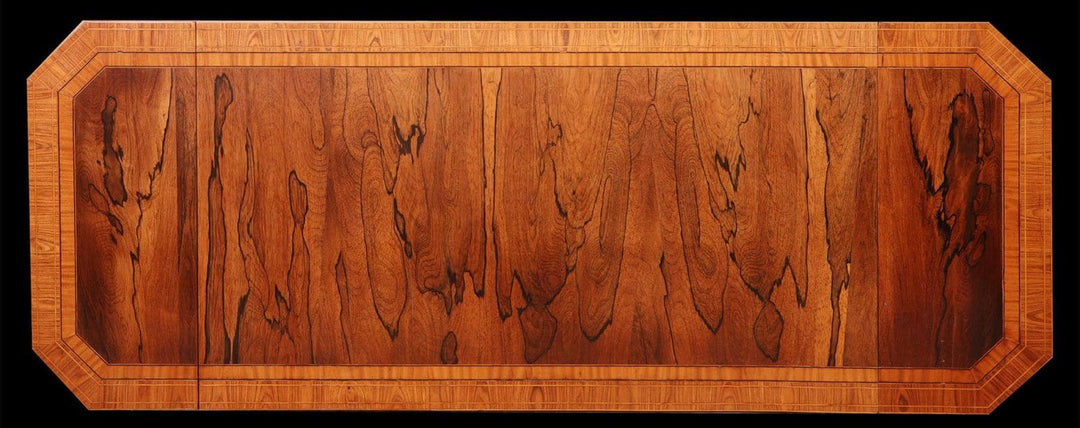
Acquiring antique bookcases for English homes demands more than a simple appreciation for aesthetics; it requires the discerning eye of a seasoned connoisseur. At Nicholas Wells Antiques, we maintain that the surface patina is the soul of any significant piece. This thin, lustrous layer, built through centuries of careful waxing and natural oxidation, provides a depth of colour that modern finishes simply cannot emulate. A genuine 18th-century surface tells a story of survival, reflecting light in an organic way that feels soft rather than manufactured. It's this "Nicholas Wells standard" that separates a museum-quality work of art from a mere piece of old furniture.
The Importance of Surface and Finish
Distinguishing between an original surface and an over-restored French polish is vital for any collector. While a mirror-like, plastic shine might appeal to the uninitiated, it often masks the wood's natural character and significantly reduces the item's historical value. We prioritise traditional methods, using high-quality beeswax to nourish the timber without erasing its past. In the world of high-end English antiques, shabby isn't chic; true luxury lies in a well-maintained, authentic finish that shows its age with dignity. Collectors should look for that deep, honeyed glow that only comes from generations of hand-polishing.
Structural Integrity and Craftsmanship
When evaluating antique bookcases for English homes, one must scrutinise the fine details that reveal a maker's skill. Hand-cut dovetail joints in drawer linings, particularly those found in Georgian mahogany pieces from 1760, should be delicate and precise. Look for the irregular marks of hand-sawn timber on the backboards, which is a clear indicator of age compared to the uniform patterns of machine-cut wood. Identifying "married" pieces is equally critical; we meticulously check that the grain of the upper section aligns with the base and that the waist mouldings are original. Authenticity often hinges on the presence of hand-blown period glass, which possesses a unique, wavy distortion and occasional air bubbles, known as seeds, that modern glass doesn't have.
The Role of Professional Restoration
Sympathetic restoration serves to revivify a piece without stripping away its historical essence. This process focuses on structural stability and the cleaning of original surfaces rather than total replacement. Conservation is the careful preservation of an object's historical narrative. Nicholas Wells provides a complimentary restoration service on all acquisitions to ensure every piece meets our exacting standards before it enters a new home. Provenance remains the final pillar of quality; a documented history of ownership from a distinguished English estate or a specific 19th-century collection adds a layer of prestige and investment security that's truly irreplaceable.
Discover our curated selection of 18th and 19th-century masterpieces by browsing our luxury cabinet furniture collection or schedule a private viewing at our showroom at 169 Piccadilly.
Acquiring Fine Antiques for the Contemporary Library with Nicholas Wells
Acquiring antique bookcases for English homes requires more than a simple transaction; it demands a partnership with a fine antiques dealer who respects the narrative of every object. At Nicholas Wells Antiques, we curate a selection that prioritises the conservation of history and the preservation of unique antique surfaces. Our showroom at 207 Regent Street serves as a sanctuary for collectors and interior decorators seeking antique works of art that transcend the ordinary. We've spent over 20 years refining our eye for the extraordinary, ensuring that every piece, whether a French giltwood mirror 19th century or a monumental library case, possesses an undeniable soul. We're proud to bridge the gap between the grandeur of the past and the sophisticated requirements of modern luxury living.
The Nicholas Wells Collection
Our inventory focuses on a highly curated selection of cabinet furniture and essential library appointments. We intentionally avoid generic period pieces, preferring instead to source rare examples with impeccable provenance. A library's atmosphere is defined by its textures, which is why we suggest pairing a grand bookcase with antique armchairs to create a cohesive, scholarly environment. This holistic approach helps our clients build spaces that feel assembled over generations. We frequently assist designers in sourcing niche objects, from Grand Tour souvenirs to Oceanic art, ensuring that every corner of the contemporary library reflects a global, educated perspective.
Seamless Acquisition and Logistics
The logistics of moving luxury antiques across borders require absolute precision. We provide fully insured UK antique dealer international shipping services, reaching clients from the historic townhouses of London to the modern penthouses of New York, Tokyo, or the Middle East. Our 'By Appointment' philosophy ensures that every visitor receives our undivided expertise and personal attention. We invite you to visit our antiques showroom by appointment in the heart of Westminster, situated near the prestigious districts of Mayfair and Piccadilly. Here, you can personally inspect the surface patina and intricate marquetry of our newest arrivals. We're committed to making the acquisition process as seamless as the craftsmanship of the pieces themselves.
Whether you're seeking a singular statement piece or looking to furnish an entire private library, our team provides the historical accuracy and logistical support necessary for such distinguished investments. Our expertise in antique restoration further ensures that your chosen decorative antiques remain in superb condition for the next century of use. By focusing on the extraordinary and the unique, we help you secure antique bookcases for English homes that are not merely furniture, but significant cultural artifacts.
Elevate Your Private Library
Choosing a focal point for your study involves more than utility; it's about honouring the architectural legacy of the 18th and 19th centuries. Whether you seek the restrained symmetry of a Georgian mahogany breakfront or the intricate brass inlays of a Regency cabinet, these pieces serve as the intellectual heart of the residence. Identifying authentic antique bookcases for English homes requires a discerning eye for original surface patina and a deep understanding of provenance, ensuring each acquisition remains a sound investment. Since 2012, Nicholas Wells Antiques has curated a collection where the conservation of history is paramount, balancing the grandeur of the past with the functional needs of a contemporary interior.
Every piece in our inventory includes complimentary professional restoration to preserve its unique antique surfaces before being delivered via our fully insured worldwide white-glove shipping service. We invite you to visit our London showroom by appointment at 169 Piccadilly to view our current collection of fine antique bookcases and consult with our specialists. It's an opportunity to discover an extraordinary work of art that transforms your space into a curated sanctuary of British heritage.
Frequently Asked Questions
What is the difference between a Georgian and a Victorian bookcase?
Georgian bookcases, dating from the 1714 to 1837 period, emphasises neoclassical symmetry and the use of dense, fine-grained mahogany. These pieces often feature delicate astragal glazing and slender proportions that reflect the architectural influence of designers like Robert Adam. In contrast, Victorian examples from the 1837 to 1901 era display more eclectic, heavy ornamentation, often utilising darker oak or walnut with robust carvings and larger panes of glass.
Are antique bookcases a good financial investment for a home?
Antique bookcases for English homes represent a stable tangible asset, with top-tier examples by makers like Gillows of Lancaster seeing a 15 percent value increase over the last decade. High-quality furniture maintains its worth through rarity and historical significance, unlike mass-produced modern alternatives. Collectors at our Mayfair showroom often find that these pieces serve as both functional library furniture and appreciating antique works of art.
How can I tell if an antique bookcase is made of solid mahogany or veneer?
You'll identify solid mahogany by examining the end grain on the top edge of a shelf or door, as a veneer shows a thin line where the decorative wood meets the base timber. On a 19th century piece, a veneer's typically 2 to 3 millimetres thick and exhibits a mirrored grain pattern known as book-matching. Solid timber feels considerably heavier and shows a consistent grain through the entire depth of the wood, which is common in early 18th century construction.
What should I look for when evaluating the provenance of an antique piece?
Look for specific physical markers such as a maker’s stamp from a firm like Holland & Sons or an original 18th century inventory label from a titled estate. A documented history that traces the piece back to its original commission in 1780 or a notable London residence adds significant value to the object. Verified provenance transforms a functional item into a significant cultural artifact with a traceable journey through history, which we meticulously document at Nicholas Wells Antiques.
Can large antique breakfront bookcases be shipped internationally safely?
Large breakfront bookcases can be shipped internationally with complete safety when managed by a specialist UK antique dealer international shipping service. We utilise custom-built ISPM15 heat-treated crates and specialised padding to protect the 18th century glass and delicate cornices during transit. Our team coordinates every logistical detail from our Piccadilly gallery to ensure these magnificent library pieces arrive in New York or Hong Kong in pristine condition.
How do I maintain the surface patina on my antique library furniture?
Maintain the surface patina by applying a high-quality beeswax polish no more than twice a year to preserve the wood's natural oils. Don't use modern aerosol sprays which contain silicones that damage 200 year old finishes and cloud the timber's depth. This careful preservation ensures the unique antique surfaces continue to reflect the history and character of the piece without stripping away the hard-earned glow of the wood.
What is a 'married' bookcase and why does it affect the value?
A 'married' bookcase is a piece where the top and bottom sections didn't start life together, often combined by a dealer in the 19th or 20th century to create a more functional unit. This lack of original unity can reduce the market value by 40 to 60 percent compared to a completely original example. Discrepancies in the timber's grain or a slight mismatch in the proportions of the mouldings usually reveal these non-original pairings to a trained eye.
How do I incorporate a large antique bookcase into a room with modern furniture?
Position a large Georgian mahogany bookcase against a minimalist, neutral wall to create a striking architectural focal point that anchors a modern room. The rich textures of 18th century timber provide a sophisticated counterpoint to contemporary glass or steel furniture. Integrating these decorative antiques into a 21st century interior demonstrates a refined eye for quality and a deep appreciation for the conservation of history. You're welcome to visit our antiques showroom by appointment at 169 Piccadilly to see these pairings in person.


Leave a comment