



The Connoisseur’s Guide to Grand Tour Objects: Insights from a Specialist
In the world of fine antiques, few pursuits are as intellectually rewarding-or as fraught with potential peril-as collecting Grand Tour objects. The discerning eye must navigate a complex landscape of late-period reproductions, all while envisioning how these magnificent echoes of antiquity might command a space within a contemporary interior. It is a field that demands more than mere appreciation; it requires the cultivated insight of a true Grand Tour objects specialist, one who can discern the subtle language of patination and the authentic hand of an 18th-century master.
In this definitive guide, we illuminate the path for the aspiring and seasoned connoisseur alike. We will explore the material mastery that defines superlative craftsmanship, revealing the key markers that separate an extraordinary original from a clever imitation. You will gain a profound understanding of the historical significance and expert valuation techniques for these treasured artifacts, empowering you to build a prestigious collection with the confidence that each piece possesses a soul, a story, and a lasting, unquestionable value.
Key Takeaways
- Grasp the historical context of the Grand Tour and the essential role of the specialist in navigating its market of classical souvenirs.
- Learn to identify the hierarchy of materials, from fine bronzes to intricate mosaics, and recognise the signature craftsmanship of key Italian workshops.
- Discover the "Three Pillars" of valuation and understand how a Grand Tour objects specialist distinguishes authentic patina from artificial distressing.
- Move beyond the traditional 'curiosity cabinet' by learning how to make these historical objects a commanding focal point in a contemporary interior.
What is a Grand Tour Objects Specialist?
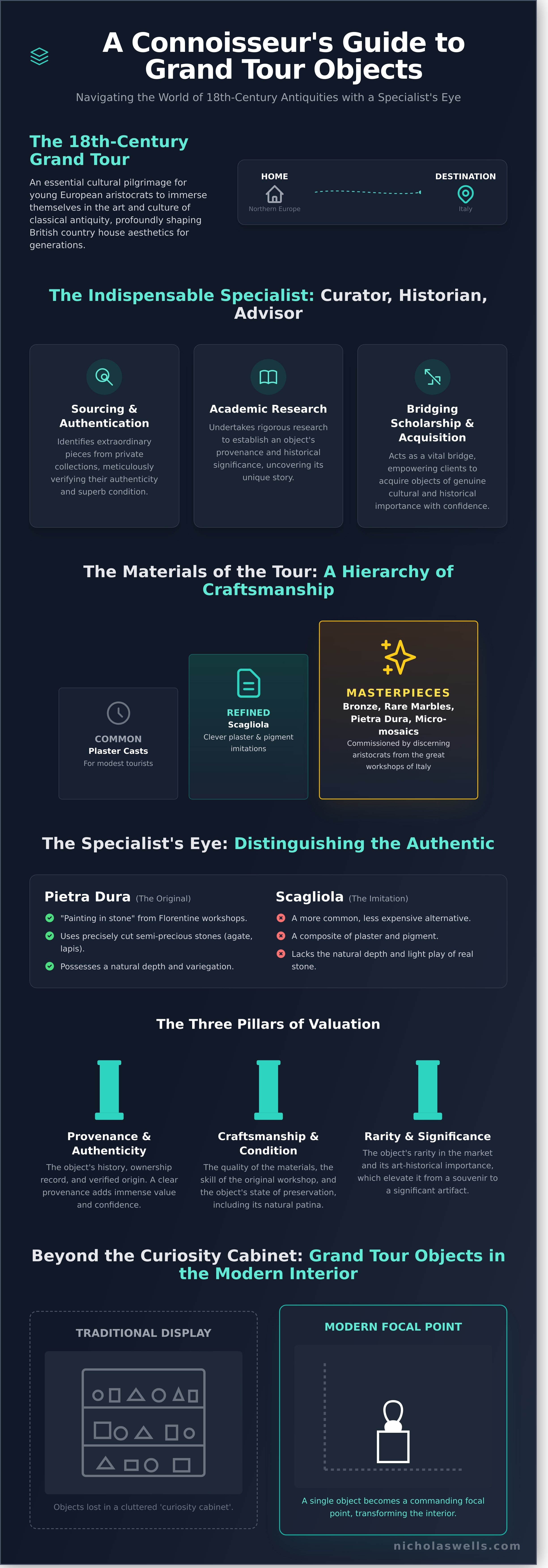
A Grand Tour objects specialist is far more than a mere dealer; they are a curator, historian, and trusted advisor dedicated to the exquisite artefacts acquired by the European elite during their formative travels. This extended journey through Europe, particularly Italy, was an essential 18th-century rite of passage-a cultural pilgrimage known as The Grand Tour, designed to immerse young aristocrats in the art and culture of classical antiquity. The specialist’s role is to navigate the vast and complex market of these historical souvenirs, understanding that an object’s provenance and context are as vital as its physical form. They possess the discerning eye required to distinguish between the common trinkets of the ‘tourist trade’ and the magnificent, often specifically commissioned, masterpieces intended for the most discerning patrons.
The Historical Context of the Grand Tourist
The 18th-century Grand Tourist was driven by a profound desire to bring the ‘Classical Ideal’ back to their northern European homes. Deeply influenced by the burgeoning Neoclassical movement, which was championed by visionary architects like Robert Adam, these collectors sought objects that embodied the grace, proportion, and intellectual rigour of ancient Greece and Rome. The Grand Tour was the cultural phenomenon that fundamentally shaped British country house aesthetics for generations. These acquisitions were not mere decorations; they were profound statements of taste, education, and social standing, intended to transform domestic interiors into showcases of worldly sophistication.
The Specialist’s Role in Modern Collecting
In the contemporary market, the expertise of a Grand Tour objects specialist is indispensable for any serious connoisseur. They perform a multifaceted role that extends far beyond simple acquisition, providing critical value in several key areas:
- Sourcing and Authentication: A specialist identifies and sources extraordinary pieces, often from distinguished private collections where they have remained for centuries, meticulously verifying their authenticity and superb condition.
- Academic Research: They undertake rigorous academic research to establish an object’s provenance and historical significance, uncovering its unique story and placing it within the correct art-historical narrative.
- Bridging Scholarship and Acquisition: Crucially, the specialist acts as a vital bridge between museum-level scholarship and the world of private collecting, empowering clients to acquire objects of genuine cultural and historical importance with absolute confidence.
The Materials of the Tour: Bronzes, Marbles, and Mosaics
The Grand Tour was not merely a journey through landscapes, but a deep immersion into the material culture of antiquity. The souvenirs acquired were direct reflections of a traveller's wealth, taste, and scholarly ambition, creating a distinct hierarchy of materials. While modest tourists might return with plaster casts, the truly discerning aristocrat commissioned works in bronze, rare marbles, and impossibly intricate mosaics. The great workshops of Rome, Florence, and Naples became centres of extraordinary technical mastery, producing objects whose quality remains a benchmark of decorative art. For the collector, understanding these materials is paramount, as the choice of stone or metal is the first step in identifying the "soul" of an object and appreciating the vision of its creator. A Grand Tour objects specialist recognises that the medium is inseparable from the message, conveying status and connoisseurship through its very substance.
Pietra Dura and Scagliola: The Art of Stone
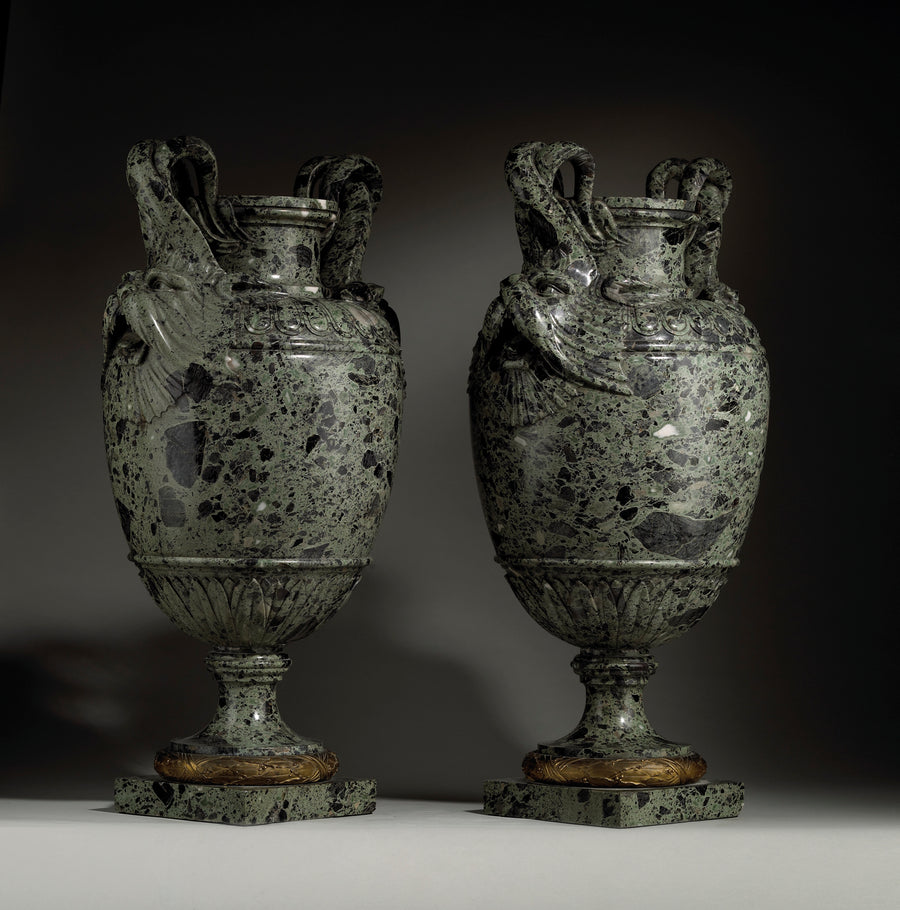
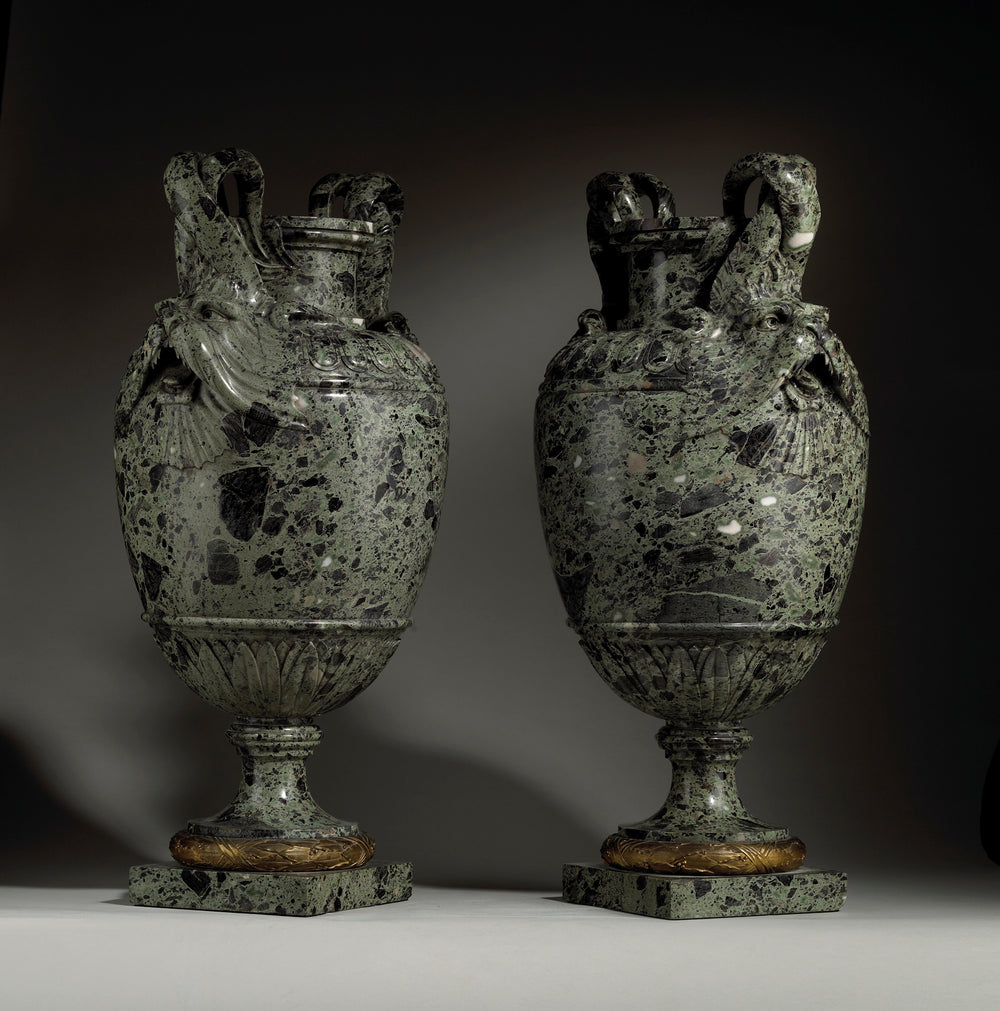
The Florentine tradition of commessi di pietre dure, or "painting in stone," represents a pinnacle of lapidary artistry. Workshops, often under Medici patronage, used precisely cut slivers of semi-precious stones-agate, lapis lazuli, and jasper-to create seamless, luminous images of breathtaking detail. Distinguishing these masterpieces from their more common imitations, such as scagliola (a composite of plaster and pigment), requires a trained eye. Genuine pietra dura possesses a depth and natural variegation that cannot be replicated, a quality evident in many fine European Objects from the period.
Micro-mosaics and the Vatican Workshops
In Rome, the artisans of the Vatican Mosaic Workshop perfected the art of the micro-mosaic, assembling thousands of tiny glass tesserae to create images of astonishing precision and painterly quality. These intricate works served as the most sophisticated artistic and cultural souvenirs of their time, capturing famous scenes like the Doves of Pliny or views of the Roman Forum on snuffbox lids and decorative plaques. When evaluating these delicate surfaces, it is crucial to inspect for missing tesserae or later restorations, as the condition significantly influences both the beauty and value of the piece after more than two centuries.
Classical Bronzes and Reductions
For those wishing to bring the monumental sculpture of antiquity into their private libraries, bronze reductions were the ultimate acquisition. Superb casts of celebrated statues like the Dying Gaul or the Laocoön were produced by renowned Roman foundries, such as those of Zoffoli and Righetti. The quality of these bronzes is determined not only by the precision of the initial casting but also by the meticulous hand-finishing, or chasing, and the richness of the patina. A superior cast, with its sharp details and deep, resonant colour, transcends mere replication to become a distinguished work of art in its own right, a standard of quality we uphold in our Sculpture collection.
The Specialist’s Eye: Authenticity, Patina, and Valuation
Discerning the true value of these historical treasures requires a cultivated eye, one trained to look beyond superficial beauty and into the very soul of an object. The valuation of any significant Grand Tour piece rests upon a triumvirate of principles: its inherent rarity, its state of preservation or condition, and, most compellingly, its provenance. Navigating these pillars is the primary role of a Grand Tour objects specialist, who must also contend with the pervasive threat of sophisticated 20th-century reproductions that now populate the market.
Identifying 18th Century Craftsmanship
An expert hand can immediately distinguish the subtle, rhythmic irregularities of 18th-century hand-tooling on bronze and marble from the cold uniformity of modern machine-finishing. There is a specific weight and tactile quality-a certain 'feel'-to authentic period materials that cannot be replicated. An expert eye can discern the subtle marks of a hand-chisel on marble or the unique porosity of early bronze casts-details that separate a period masterpiece from a later copy. These techniques were applied to a remarkable variety of items, from monumental sculpture to the intricate pieces detailed in the Cooper Hewitt's study on Souvenirs of the Grand Tour. Crucially, true 18th-century patina is a slow chemical process, a delicate bloom that develops over centuries of atmospheric interaction, which cannot be convincingly mimicked by the harsh and immediate application of modern acids.
The Importance of Provenance
Provenance is the documented history of an object, its unique journey through time. Tracing a piece back to a specific collection, such as a distinguished "English Country House" sale, provides an unimpeachable narrative that can elevate its significance and value exponentially. An object with a documented history is not merely an antique; it is a cultural artefact with a story to tell. This documented history can often double or even triple the value of an otherwise identical piece. The painstaking work of archival research-sifting through historic inventories, auction catalogues, and family records-is a vital part of the specialist’s daily work in establishing this golden thread of ownership.
The confluence of these factors-the physical evidence of age, the threat of later copies, and the profound impact of a documented history-underscores why a specialist’s certificate of authenticity is not merely advisable, but absolutely essential for any high-value acquisition. It is the ultimate assurance of quality, a testament to an object's genuine place in history.
Curating the Collection: Grand Tour Objects in the Modern Interior
The modern approach to collecting has evolved far beyond the dense, encyclopaedic arrangements of the traditional cabinet of curiosities. Today, the placement of a Grand Tour object within a contemporary interior is an exercise in deliberate, integrated luxury. A single, magnificent marble torso or a finely cast bronze can serve as a powerful focal point, its classical form creating a sublime contrast against clean lines and neutral palettes. The key lies in allowing the object space to breathe, enabling its historical resonance to permeate the room. Effective lighting is paramount; a carefully directed spotlight can trace the elegant contours of a sculpture, revealing the subtle tooling of the artist's hand and the rich patina of age.
The ultimate achievement in modern curation is the conversation staged between the ancient and the new. Placing a Roman-inspired sculpture in dialogue with a piece of modern art creates a dynamic tension that is both intellectually stimulating and visually arresting, a testament to the timeless appeal of superlative form.
Creating a Narrative with Objects
A thoughtful collection tells a story. Rather than displaying disparate items, a Grand Tour objects specialist often advises grouping pieces to create a scholarly dialogue. One might assemble a collection based on a unifying theme, such as mythological figures, or by a specific material, like the deep, rich hues of rosso antico marble. A classical bust on a console table lends an immediate sense of gravitas to a space, connecting the present moment to a long lineage of artistic appreciation. For inspiration on creating such compelling vignettes, one can explore curated displays of Grand Tour Souvenirs.
The Practicality of Antique Objects
Beyond their aesthetic significance, these objects possess a remarkable material integrity. The enduring nature of statuary marble and solid bronze offers a permanence that few contemporary decorative pieces can rival, ensuring their status as generational heirlooms. This durability makes them exceptionally well-suited for integration into functional, lived-in spaces. A pair of specimen marble obelisks can anchor a library, while a small bronze animalier might grace a study desk, serving not merely as decoration but as an intellectual anchor-a daily touchstone to the enduring power of classical art and history.
Nicholas Wells: Your Grand Tour Objects Specialist in London
At Nicholas Wells Antiques, our approach to the fine and decorative arts is guided by an unwavering philosophy built on three pillars: Quality, Rarity, and Scholarly Integrity. We perceive Grand Tour objects not merely as beautiful artefacts, but as profound cultural documents that carry the weight of history and the soul of their creator. This perspective informs our mission to assist discerning collectors in building world-class portfolios, ensuring each acquisition is a distinguished addition with a compelling narrative.
Our commitment to excellence extends to every facet of our service. We believe the stewardship of these historical pieces is a significant responsibility, which is why we offer complimentary restoration by master artisans to ensure their impeccable condition. To provide complete peace of mind, every object is dispatched with fully insured worldwide shipping, handled with the meticulous care and precision it deserves.
A Curated Selection of the Extraordinary
Our acquisitions focus on the cultural zenith of the 18th and 19th centuries, presenting superb examples of bronze statuary, architectural models, and intricate micromosaics that once captivated European aristocrats. For a piece to enter our collection, it must satisfy an exacting standard of excellence, demonstrating superior craftsmanship, exceptional condition, and a verifiable provenance. We invite you to explore the Works of Art collection to discover these magnificent objects for yourself.
Personalized Advisory for Collectors
As a dedicated Grand Tour objects specialist, Nicholas Wells Antiques provides a bespoke advisory service tailored to the unique ambitions of each client. We collaborate closely with interior designers to source specific classical motifs that complete a design vision and work with private collectors to develop sophisticated, long-term acquisition strategies. Our guidance helps build collections that are not only aesthetically cohesive but also historically significant. For an initial discussion, please contact Nicholas Wells Antiques for a specialist consultation.
To experience the artistry and presence of these pieces firsthand, we welcome you to visit our Westminster gallery by appointment for a private viewing.
The Enduring Legacy of the Grand Tour
As we have explored, the captivating world of Grand Tour objects is one of profound historical resonance, where understanding the nuances of material, from lustrous bronze to sublime marble, is as crucial as discerning the authenticity of a piece's patina. These magnificent souvenirs are not merely relics of a bygone era; they are enduring statements of culture and taste, capable of elevating the most contemporary of interiors with their storied presence and unparalleled craftsmanship.
Navigating this distinguished market requires more than passing admiration; it demands the trusted guidance of a dedicated Grand Tour objects specialist, whose expertise can illuminate the path from enthusiast to true connoisseur. Since our establishment in London in 2012, Nicholas Wells has been that guide for collectors worldwide, curating only the most exceptional examples of the form.
We invite you to explore our exquisite collection of authentic Grand Tour Objects, where each masterpiece is accompanied by our complimentary restoration services and secured with fully insured worldwide shipping. Begin your own journey into history, and let these extraordinary artifacts tell their next chapter with you.
Just as the Grand Tour was a journey of discovery that defined a generation of connoisseurs, today's professionals embark on their own journeys to build a fulfilling career. Exploring new opportunities is a modern-day rite of passage, and for those looking to start a new chapter in a region steeped in history, you can discover Alpha.jobs for opportunities in Cyprus.
Frequently Asked Questions About Grand Tour Objects
What exactly defines a “Grand Tour” object?
A Grand Tour object is a sophisticated memento acquired during the eponymous educational rite of passage undertaken by young aristocrats, primarily from the 17th to the 19th century. These are not common trinkets, but rather scholarly artefacts-such as bronze reductions of classical sculpture, architectural models of Roman ruins, or exquisite micro-mosaics-that served to demonstrate the owner's classical education and refined taste. Each piece was a tangible link to the cultural epicentres of Europe, particularly Italy.
How can I tell if a Grand Tour bronze is an 18th-century original?
An 18th-century bronze possesses a deep, lustrous patina that develops organically over centuries and cannot be convincingly replicated. One must examine the quality of the cast; early examples, often produced using the lost-wax method, exhibit exceptionally fine detailing and subtle variations. Look for evidence of meticulous hand-finishing, such as sharp chasing and file marks, which distinguish them from the more uniform, later 19th-century casts that were produced in greater numbers for a wider market.
Are Grand Tour objects a good financial investment in 2026?
While market fluctuations are inevitable, Grand Tour objects of exceptional quality and distinguished provenance have demonstrated remarkable resilience and enduring appeal. The most discerning collectors recognise their intrinsic historical and artistic merit, which underpins their value. Acquiring a superb example is less a speculative venture and more an investment in tangible cultural heritage. As such, the finest pieces are anticipated to remain a stable and desirable asset class for the sophisticated connoisseur in the years to come.
What is the most sought-after material for Grand Tour collectors?
While patinated bronze and finely carved marbles from celebrated Roman workshops remain perennially sought-after, the most sophisticated collectors often pursue rarity and exceptional craftsmanship above all else. Consequently, magnificent Roman micro-mosaics, with their thousands of minute, hand-set tesserae depicting classical scenes, command immense interest. Similarly, rare architectural models in cork or specimen marbles are highly coveted for their scholarly precision and decorative power, representing the pinnacle of the Grand Tour aesthetic.
How do I care for and clean an antique micro-mosaic?
The preservation of an antique micro-mosaic demands a delicate and conservative approach. For routine care, gentle dusting with a soft, natural-bristle brush is sufficient to remove surface accumulations. Should more significant cleaning be required, a slightly dampened cotton swab with distilled water may be used with extreme caution, avoiding any saturation of the setting. It is imperative to avoid modern chemical cleaners, which can irrevocably damage the delicate tesserae and their original grout.
This same principle of meticulous, expert care applies to other valuable heirlooms beyond Grand Tour objects. For collectors who also treasure fine timepieces or jewellery, ensuring their longevity requires similar specialist attention. Services like those from Atoz Watch And Jewellery Repairs are essential for the professional preservation and restoration of such intricate items.
Why are many Grand Tour objects found in English Country Houses?
The English Country House is the natural repository for these treasures, as the Grand Tour was an indispensable component of a British nobleman's education during the 18th and 19th centuries. These young aristocrats were the primary patrons of the Roman and Florentine workshops, commissioning and collecting objects on a grand scale. Upon their return, these magnificent pieces were displayed as symbols of their worldliness and classical erudition, forming the very fabric of these historic interiors.
For those inspired to see these magnificent historic interiors for themselves, the spirit of the cultural tour is still very much alive. To explore some of England's most famous country houses on a modern luxury excursion from London, you can check out Timescape Tours.
Can I buy authentic Grand Tour objects online with confidence?
Acquiring significant antiques online is indeed possible, provided one proceeds with discernment and scholarly rigour. Confidence is secured by partnering with a reputable Grand Tour objects specialist whose expertise is well-established and who provides exhaustive documentation, detailed condition reports, and a guarantee of authenticity. A trusted dealer will have conducted meticulous research into an object's provenance and condition, offering the transparency necessary for a connoisseur to make an informed and secure acquisition from anywhere in the world.
What is the difference between a reproduction and a period reduction?
The distinction is of paramount importance. A period reduction is a historically significant work of art in its own right-a smaller-scale version of a famous classical or Renaissance sculpture, executed during the 17th to 19th centuries by a skilled artist for a Grand Tour patron. In contrast, a reproduction is a modern copy, lacking the age, patina, and artistic integrity of a period piece. The former is a collectible antique; the latter is merely a decorative imitation.


Leave a comment