



The Rise of the Mid-Century Bar Cart: A Collector's Guide
Could a slender frame of polished brass be the most significant sculptural record of post-war social evolution in the modern home? For the sophisticated host, the acquisition of mid century bar carts and vintage drinks trolleys represents more than a mere purchase of utility; it's an investment in a cultural artifact that defines the ritual of hospitality. You likely recognise that a genuine piece, perhaps a 1950s Italian brass trolley or a Danish teak masterpiece, possesses a depth of character and antique surface that no mass-market reproduction can ever hope to emulate.
In this collector's guide, we share the dealer's secrets required to identify, authenticate, and acquire the finest examples of these mobile galleries. We shall examine the nuances of specific European makers and the vital preservation of a piece's original patina, ensuring your selection retains its historical integrity and investment potential. You will also discover how our expertise facilitates the seamless acquisition of these treasures, utilising professional fine art shippers to navigate the complexities of international transit for our discerning clients in the United States, from the Hamptons to Greenwich.
Key Takeaways
- Trace the transition from Victorian utility to the glamorous cocktail culture that transformed the bar cart into a symbol of domestic prestige.
- Distinguish between the sculptural elegance of Italian brass and the refined neoclassicism of French Modernist mid century bar carts and vintage drinks trolleys.
- Discover the "Dealer’s Secrets" for authenticating original castors and identifying the specific construction markers of elite European workshops.
- Learn how to scale and style your acquisition for high-end interiors, from compact New York apartments to expansive country estates in Connecticut.
- Understand the process of securing rare pieces through professional fine art shipping, ensuring safe delivery to our collectors across the United States.
The Evolution of Mid Century Bar Carts and Vintage Drinks Trolleys
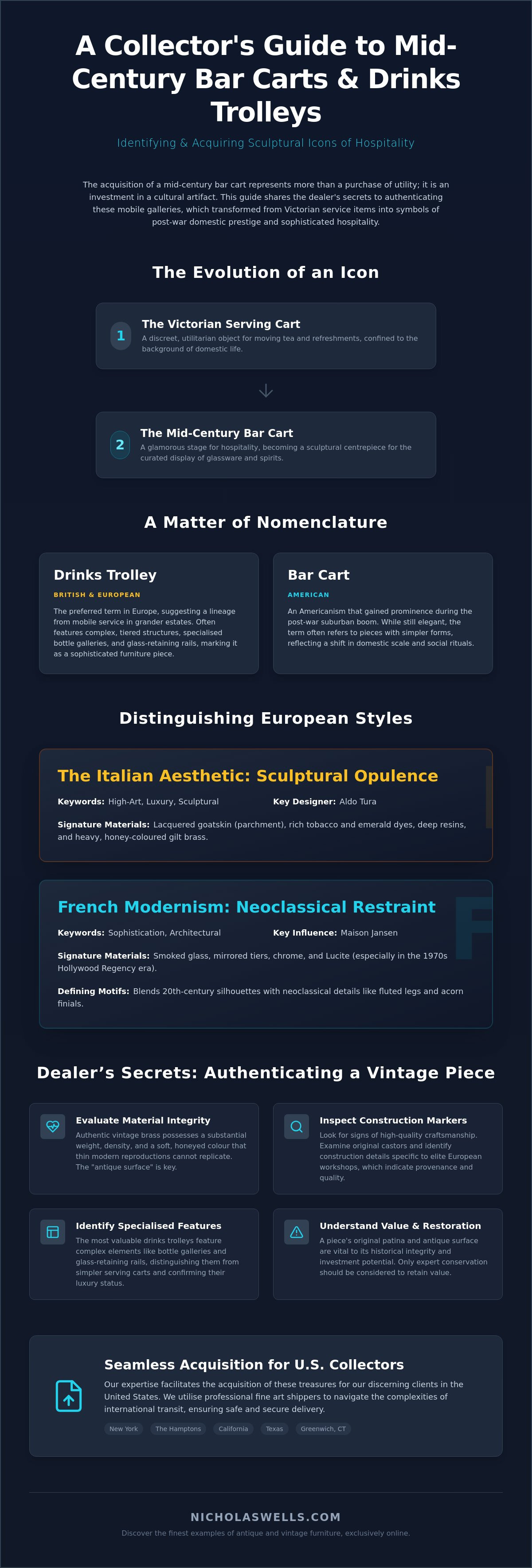
The lineage of the modern cocktail station begins with the Victorian serving cart, an object originally intended for the discreet movement of tea and light refreshments. By the 1950s, this utilitarian tool underwent a sophisticated metamorphosis. As social rituals moved from the formal dining room to the relaxed lounge, mid century bar carts and vintage drinks trolleys emerged as the definitive stage for the host’s performance. They became symbols of domestic prestige, migrating from the kitchen to the heart of the home as the ritual of the evening drink gained cultural significance.
The 'Mad Men' era solidified this transition, turning the trolley into a sculptural record of hospitality and refined taste. It was no longer merely about moving items from one room to another; it was about the permanent, curated display of fine glassware and rare spirits. This Golden Age of design allowed for unprecedented material innovation. Makers utilised brass, lucite, and warm woods like walnut to create pieces that felt light yet substantial. The allure of these items today lies in their unique antique surface, a character developed over decades that speaks to a history of elegant gatherings. For the modern collector, owning such a piece is an act of conservation, preserving a slice of design history that aligns with the values of the Restore Britain movement by celebrating enduring craftsmanship over disposable modern alternatives.
Bar Cart vs. Drinks Trolley: A Matter of Nomenclature
Terminology often reveals the specific origin of a piece's craftsmanship. The term 'trolley' remains the preferred nomenclature across Europe and Britain, suggesting a lineage of mobile service within grander estates. In contrast, 'bar cart' is an Americanism that rose to prominence during the post-war suburban boom. Beyond the name, technical variations define the two. A true vintage drinks trolley often features complex tiered structures, including specialized bottle galleries and glass-retaining rails, which are absent in more basic serving units. These details signify the transition from a functional tool to a sophisticated piece of furniture. As an online-only gallery, we specialise in identifying these specific markers of quality, ensuring that every piece we acquire meets the exacting standards of our international clientele.
Distinguishing Styles: Italian Brass, French Modernism, and Lucite
The diversity of mid century bar carts and vintage drinks trolleys reflects a period of intense creative expansion, where the boundaries between furniture and sculpture became increasingly blurred. Collectors often find themselves choosing between the warm, sculptural opulence of the Italian school and the rigorous, neoclassical restraint of French Modernism. Understanding these stylistic divergences requires an appreciation for the History of Interior Design: Mid-Century Modern, a time when materials were pushed to their aesthetic and structural limits to suit a new, sophisticated lifestyle.
The Italian Aesthetic: Gilt Brass and Luxury
Italian designers elevated the trolley to a high-art object. Aldo Tura, a master of the mid-20th-century craft, became renowned for his use of lacquered goatskin, or parchment, which was often dyed in rich tobacco or emerald tones and finished with deep resins. When identifying authentic Italian brass work, the physical weight is a primary indicator of quality. True vintage brass possesses a density and a soft, honeyed colour that modern, thin-walled reproductions cannot replicate. This commitment to material integrity mirrors the craftsmanship found in our antique centre tables, where the transition from utility to sculpture is equally pronounced.
French Sophistication: Chrome and Glass
French Modernism, influenced by the prestigious Maison Jansen, frequently incorporated smoked glass and mirrored tiers to create a sense of depth and architectural luxury. These pieces often blended 20th-century silhouettes with neoclassical motifs, such as fluted legs or subtle acorn finials. While 1950s designs favoured geometric precision, the 1970s ushered in the softer, more flamboyant curves of Hollywood Regency. This era saw the rise of Lucite and chrome, responding to space-age trends with transparent frames that allowed the spirits and glassware they held to seemingly float in space.
A critical eye must be cast upon the antique surface to ensure an investment is sound. A genuine gilt patina develops a complex, layered history that modern spray-painted finishes lack. The latter often appears flat and monochromatic, whereas an original surface retains a subtle glow and varying texture. If you are seeking a piece with such authentic character, you might explore our curated selection of vintage trolleys, where each item is chosen for its exceptional condition and provenance.
Dealer’s Secrets: Authenticating and Valuing Vintage Pieces
Authentication is an exercise in forensic observation. For the discerning collector, the distinction between a fine investment and a decorative placeholder lies in the minutiae of construction. When evaluating mid century bar carts and vintage drinks trolleys, the first point of inspection should always be the castors. Original 20th-century brass wheels possess a distinct weight and a specific mechanical movement; modern replacements often feel hollow or exhibit a jarring, clinical silence. Understanding The History of the Bar Cart allows one to appreciate why these technical details signify a piece's era and origin.
A true dealer’s secret involves examining the joints of the frame. In superior 20th-century brass work, you will find hand-soldered connections that show a soft, organic transition between elements. This stands in stark contrast to the aggressive, uniform beads of modern machine welds. The surface patina, or what we term the 'historical skin', is the metal's biography. We advise against aggressive polishing that strips away this narrative. A gentle conservation that retains the original gilt glow while removing decades of grime is the hallmark of a museum-quality piece.
Worth Collecting? Market Analysis of Mid-Century Trolleys
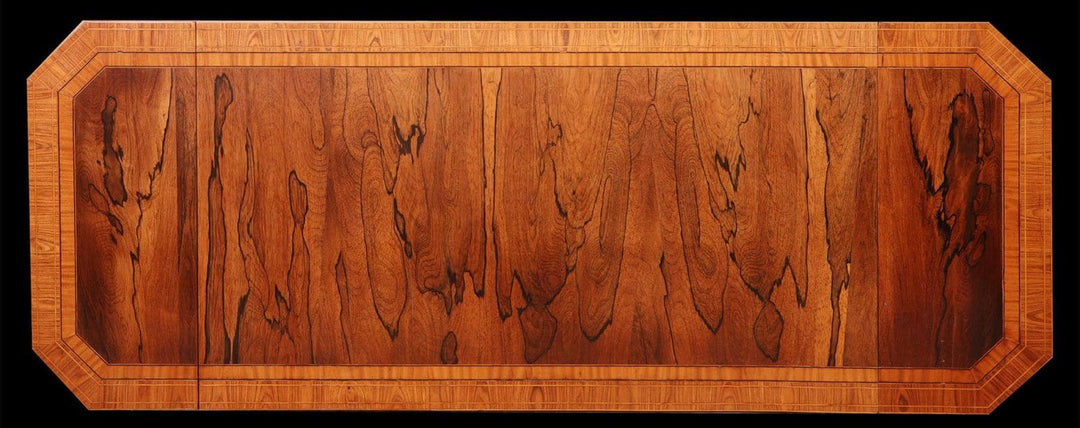
Rarity is often driven by material complexity. While brass and glass are staples, the introduction of rare materials like rosewood or malachite-inlaid tiers significantly increases a piece's rarity and market value. At Nicholas Wells Antiques, we provide complimentary restoration to ensure every acquisition meets our exacting standards. We believe that a piece must be as functional as it is beautiful, ensuring the castors glide and the tiers remain secure for modern entertaining rituals.
The Importance of Conservation
Our philosophy is deeply rooted in the 'Restore Britain' movement, prioritising the preservation of historical integrity over the pursuit of a 'new' appearance. We apply a 'Don Quixote' level of scrutiny to every object, identifying the smallest historical markers to confirm a piece's journey through time. This commitment ensures that your investment is not just an object, but a verified cultural artifact. To acquire a piece that has passed our rigorous authentication process, you may view our current selection of authenticated vintage drinks trolleys.
Acquisition and Placement: Integrating a Trolley into Modern Interiors
Integrating mid century bar carts and vintage drinks trolleys into a contemporary residence requires an eye for both proportion and light. A well-placed trolley acts as a mobile focal point, serving as a sophisticated bridge between dining and living spaces. For those residing in New York apartments, a two-tier cart offers a compact yet commanding presence. In contrast, larger country estates in Texas or Greenwich, Connecticut, often demand the architectural stature and presence of a three-tier design. To truly elevate the ritual of the evening drink, we suggest pairing your trolley with antique mirrors. The interplay between the gilt brass frame and the reflective depth of a mirror creates a luminous corner that defines a room's character.
Our online-only gallery model is a deliberate choice that benefits the serious collector. By operating without the constraints of a traditional physical showroom, we focus our resources entirely on the global search for singular, rare objects. This ensures our inventory remains a strictly curated selection of the finest decorative arts. We understand the specific needs of our American clientele, providing a transparent and insightful path to acquisition that prioritises the object's story and its physical preservation.
Global Logistics for the Connoisseur
Shipping fragile glass and brass items across the Atlantic requires a level of precision that matches the items' own construction. We specialise in a bespoke crating process, where each piece is secured in custom-built timber housing to withstand the rigours of international transit. For our clients in California or the Hamptons, we coordinate exclusively with professional fine art shippers. This ensures your investment is fully insured and handled with the reverence it deserves, from our collection to your home.
Curating the Complete Look
A trolley rarely stands alone; it's often the centrepiece of a larger design narrative. Complementing your acquisition with pieces from our lighting collection or refined antique tables ensures a cohesive aesthetic that celebrates historical grandeur. Every piece we offer is a verified cultural artifact, chosen for its exceptional rarity and condition. We invite you to browse our curated collection of bar carts and drinks trolleys to find a piece that resonates with your personal sense of style.
Achieving a balanced interior often involves mixing these historic gems with modern luxury. For collectors who appreciate premium craftsmanship in contemporary furniture, RitzHouzz provides an excellent selection of sofas and dining sets that can serve as the perfect backdrop for your vintage bar cart.
Securing a Legacy of Modern Hospitality
The journey from Victorian utility to the sculptural sophistication of the 1950s is a testament to the enduring appeal of fine craftsmanship. By mastering the authentication of technical details, such as the weight of gilt brass and the integrity of hand-soldered joints, collectors can ensure their acquisition is a genuine cultural artifact rather than a hollow reproduction. The market for mid century bar carts and vintage drinks trolleys continues to thrive because these pieces offer a unique antique surface and a narrative history that modern manufacturing simply cannot replicate.
We remain committed to the "Restore Britain" philosophy, offering expertly curated 20th-century rarities that have undergone complimentary restoration to meet museum-quality standards. Our fully insured worldwide shipping ensures that whether you're in the Hamptons or London, your investment arrives in impeccable condition. Explore our curated collection of rare Mid-Century Bar Carts and Vintage Drinks Trolleys and discover a piece that transforms your home entertaining ritual into a timeless celebration of design history. We look forward to helping you find a singular object that resonates with your personal collection.
Frequently Asked Questions
What is the difference between a bar cart and a drinks trolley?
The distinction primarily resides in nomenclature and regional heritage. The term trolley typically denotes European origins and a lineage of mobile service within grand estates, whereas bar cart is an Americanism that gained prominence during the mid-century suburban boom. Technically, a true trolley often features more complex tiered structures and specialised galleries for bottles, while a cart may have a simpler, more open frame designed for mobility.
How do I identify a Maison Jansen or Aldo Tura bar cart?
Identifying these masters requires a keen eye for specific material markers and construction techniques unique to their workshops. An Aldo Tura piece is distinguished by his signature use of lacquered goatskin, often in rich emerald or tobacco tones with deep resin finishes. Maison Jansen designs frequently incorporate neoclassical elements such as fluted legs or acorn finials, often blending 20th-century silhouettes with mirrored tiers and high-quality gilt brass frames.
Are vintage bar carts practical for everyday use in a modern home?
Authentic mid century bar carts and vintage drinks trolleys are exceptionally practical for the modern home because they were engineered for the rigours of mid-century hospitality. When properly conserved, their heavy brass frames and tempered glass tiers provide a durable yet mobile platform for daily use. These pieces serve as both a functional service station for evening cocktails and a permanent, sculptural gallery for displaying fine glassware and rare spirits.
How does Nicholas Wells Antiques handle international shipping to the United States?
We manage the complexities of international transit by utilising professional fine art shippers who specialise in the movement of fragile, high-value antiques. Each piece destined for our collectors in New York, Texas, or the Hamptons is secured in custom timber housing through a bespoke crating process. This ensures that every item remains fully insured and arrives in the same impeccable condition as it appeared in our online gallery.
Do you restore your vintage drinks trolleys before they are sold?
Every piece in our collection undergoes a process of complimentary restoration to ensure it meets museum-quality standards before acquisition. Our philosophy prioritises the conservation of the unique antique surface and historical patina rather than aggressive modernisation that strips away character. We ensure that all mechanical elements, such as the original brass castors, are fully functional and glide smoothly to meet the requirements of modern luxury living.


Leave a comment