



18th Century English Furniture Explained
A well-made George II chair or a finely drawn Georgian commode has a way of changing a room immediately. Not because it is old, but because the best 18th century English furniture carries proportion, restraint and craftsmanship that later imitations rarely match. For collectors and decorators alike, this is furniture that does more than fill a space - it establishes tone, confidence and cultural depth.
The term covers a surprisingly broad field. Across the 1700s, English furniture moved from the late Baroque weight of the early Georgian period to the lighter, more architectural refinement associated with mid-century makers, and then towards the elegant neoclassicism of the later decades. To speak of 18th century English furniture as a single style is therefore misleading. The century contains distinct shifts in timber, form, ornament and taste, and understanding those changes is often the difference between buying wisely and buying decoratively.
What defines 18th century English furniture?
At its best, English furniture of the period combines disciplined design with exceptional cabinet-making. Proportion matters enormously. Even richly carved pieces tend to feel balanced rather than excessive, and the finest examples reveal an assured understanding of architecture, classical ornament and domestic use.
Materials help date and define the period. Early 18th-century pieces are often made in walnut or oak, with walnut dominating more fashionable interiors during the Queen Anne and early Georgian years. By the middle of the century, mahogany transformed English furniture making. Its strength and fine grain allowed for crisper carving, more ambitious shaping and a higher level of finish. That change alone marks one of the major dividing lines in the market.
Construction is equally telling. Serious collectors look beyond surface polish to the secondary woods, drawer linings, jointing, veneers and the quality of carving. The reverse, underside and interior often say more than the front. A beautiful façade with crude timber choices or awkward construction can suggest a later pastiche, heavy alteration or outright reproduction.
The main periods within 18th century English furniture
Queen Anne and early Georgian taste
The opening decades of the century favoured elegance over grandeur. Walnut bureau cabinets, feather-banded chests, gateleg tables and graceful cabriole-legged chairs are among the most recognisable forms. Decoration was often relatively restrained, relying on veneers, figured grain and carefully judged line rather than exuberant surface enrichment.
This furniture suits interiors where quiet authority is preferred to display. A well-proportioned walnut chest can hold its own in a panelled London drawing room or in a more pared-back contemporary scheme. That adaptability explains why early Georgian pieces remain so desirable.
George II and the rise of mahogany
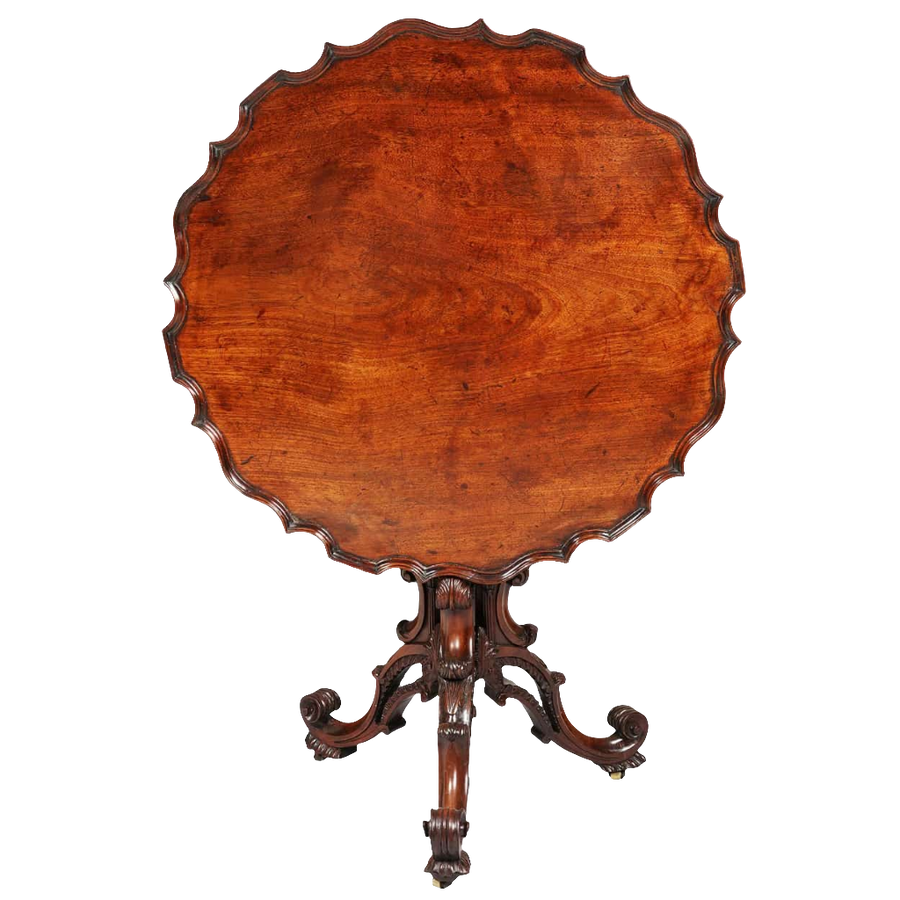
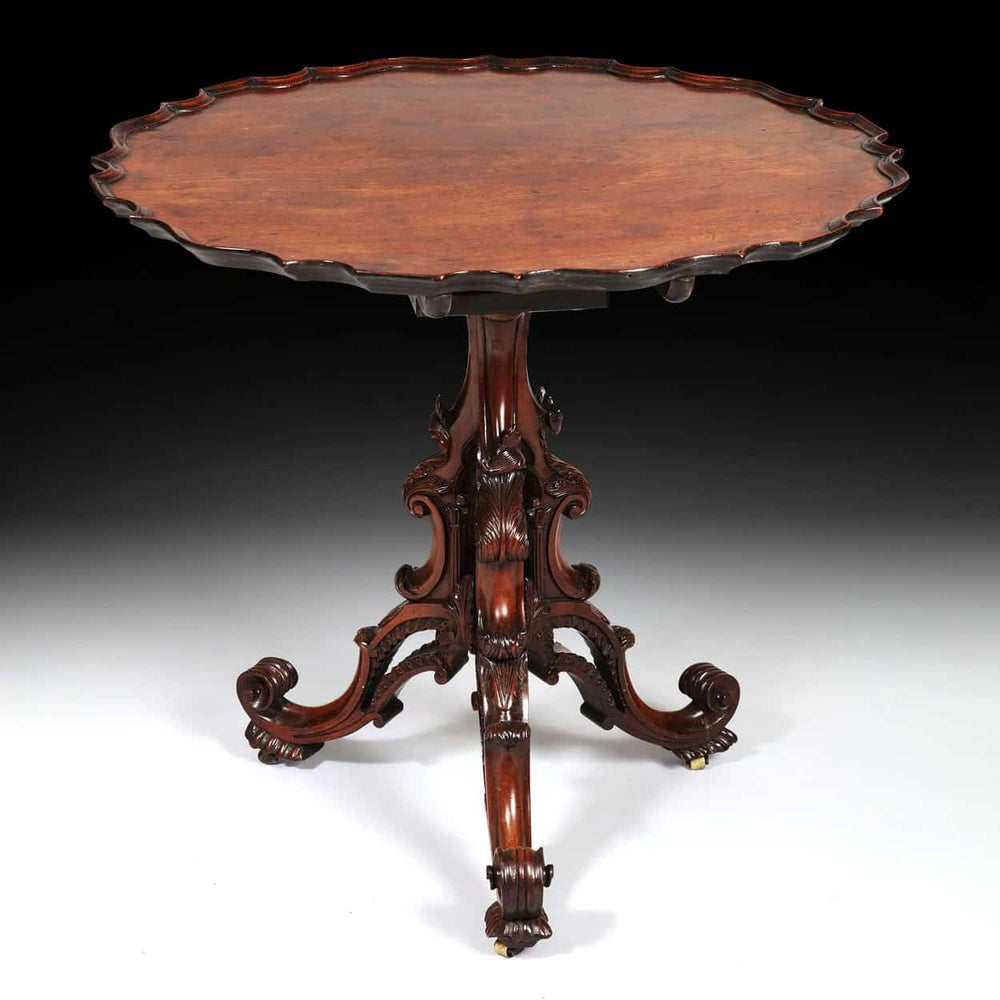
By the 1730s and 1740s, mahogany began to dominate high-quality production. The result was a more sculptural language: deeper carving, claw-and-ball feet, bolder shell motifs and stronger silhouettes. Dining tables, library tables, bachelors chests and sets of chairs became more expressive without losing structural discipline.
This is the period many buyers respond to first because it feels substantial and confident. Yet quality varies widely. A mid-18th-century mahogany chest of drawers can be sublime in its timber and proportion, or merely competent. The difference often lies in the sharpness of mouldings, the flow of the bracket feet, the colour of the timber and whether the handles and surface remain convincing.
Chippendale, rococo and gothic influence
Thomas Chippendale’s published designs shaped taste profoundly, though not every chair labelled “Chippendale” has any real connection to his workshop. During the middle decades of the century, Chinese, Gothic and Rococo motifs entered English furniture with increasing fluency. Pierced splats, fretwork, carved foliate details and more adventurous mirror and seat designs appeared.
These pieces can be among the most decorative and room-defining examples of the century. They also demand judgement. Rococo carving should feel alive rather than repetitive, and Gothic details should have conviction rather than novelty value. Fine examples possess movement and intelligence; weaker ones can feel busy.
The neoclassical later century
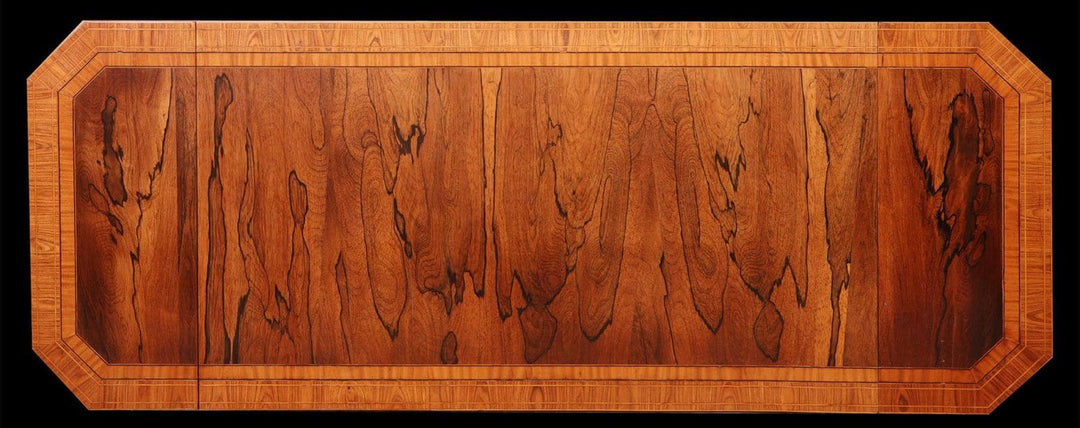
By the latter part of the 18th century, English taste shifted again towards cleaner lines and archaeological correctness, influenced by figures such as Robert Adam and leading makers including Hepplewhite and Sheraton. Satinwood, harewood, painted decoration, marquetry and refined brass inlay became more prominent. Forms grew lighter and more architectural.
For some collectors, this is the most sophisticated phase of 18th century English furniture. For others, the earlier mahogany periods offer greater warmth and gravitas. Neither view is wrong. It depends on the interior, the collector’s eye and whether one values delicacy over presence.
Why collectors still seek 18th century English furniture
There is a practical reason these pieces remain central to serious interiors: they work. A Georgian chest beside a modern painting, or a pair of period armchairs beneath a contemporary light fitting, creates a richer conversation than a room furnished entirely from one era. The furniture brings age, material honesty and individuality.
There is also the matter of scarcity. Truly fine, untouched examples are not common. Over two centuries, many pieces have been altered, reduced, re-polished, re-handled or assembled from elements. Good survivals with strong colour, sound condition and sensible restoration deserve close attention because the market increasingly rewards authenticity over perfection.
That said, condition is not a simple matter of original versus restored. Furniture made for use and admired for generations will often show intervention. The key question is whether the restoration has been sympathetic. A replaced backboard or old handle change may be acceptable, even expected, if disclosed and professionally handled. Aggressive rebuilding, stripped surfaces or decorative additions are another matter entirely.
How to judge quality and authenticity
The first test is visual confidence. Does the piece sit properly? Are the proportions resolved? Does the timber have depth and character? Furniture of real quality tends to look inevitable, as though each line belongs.
The second test is technical. Examine drawer construction, oak or deal linings, hand-cut dovetails, tool marks and wear patterns. Veneers should correspond to the period and type. Feet, handles and locks deserve scrutiny because they are frequently altered. Carving should show variation and undercutting, not the dead regularity of later machine-assisted work.
Provenance, when available, adds another layer of assurance. A recorded country house history, a known collection or a traditional dealer chain can materially strengthen a piece. Yet provenance is not always present, and absence alone does not diminish merit. Connoisseurship still matters. A dealer who understands timber, period construction and restoration will often offer more value than a vague story attached to a mediocre object.
For that reason, buyers at the top end tend to favour fully authenticated pieces and clear condition reporting. This is especially true for clients furnishing substantial houses in London, New York or the Hamptons from a distance. Photographs can convey beauty; they cannot replace expert assessment.
Choosing the right pieces for an interior
Not every period piece should be bought because it is early, rare or expensive. Some belong in collections; others belong in rooms. The distinction matters.
Case furniture is often the strongest place to begin. Chests, bureaux, bookcases and side tables offer utility as well as presence, and they integrate more easily into varied schemes than highly formal seating. A good walnut chest or a handsome mahogany writing table can anchor a bedroom, hall or study without forcing the room into pastiche.
Dining furniture requires more care. Sets are appealing but frequently married or later assembled. Scale is also crucial. An 18th-century table made for a townhouse may not suit a larger contemporary dining room unless paired thoughtfully. Likewise, a suite of chairs may be historically attractive but uncomfortable for regular use if seat heights and backs are not considered.
Decorators often use single statement pieces most successfully: a giltwood mirror over a chimneypiece, a serpentine commode in an entrance hall, a pair of side tables in a drawing room. These choices allow period furniture to speak clearly without overburdening the space.
Buying with discernment
The strongest collections are rarely built quickly. They are shaped through patience, comparison and a willingness to wait for the right colour, proportion and level of originality. There are moments when a rare form justifies compromise in condition, and others when a beautifully preserved but ordinary example should be passed over. It depends on the purpose of the purchase.
If the aim is to furnish an elegant interior, visual power and integrity may matter more than absolute academic purity. If the aim is to build a collection, attribution, period correctness and provenance rise in importance. A trusted specialist can help balance those priorities, particularly when restoration, authenticity and delivery logistics all affect the final decision.
Nicholas Wells Antiques approaches the category in precisely that spirit: not as a broad decorative theme, but as a field where scholarship, condition and curatorial judgement still distinguish the memorable from the merely old.
The most rewarding 18th-century pieces do not announce themselves loudly. They reveal themselves over time - in the colour of the mahogany at dusk, in the sharpness of a moulding, in the way a room feels more settled once they are in place. That is usually the clearest sign that one has chosen well.


Leave a comment