



Best Antiques for Drawing Rooms with Lasting Presence
A drawing room earns its character in the pauses between conversation: the candlelight caught in a gilt mirror, the patina of mahogany at the edge of a chair arm, an object on a table that rewards a closer look. The best antiques for drawing rooms do more than fill a handsome space. They establish a point of view, lending proportion, history and a sense that the room has evolved with assurance rather than been furnished all at once.
For a principal reception room, the most successful scheme rarely depends on accumulating many period pieces. It depends on selecting a small number with strong silhouette, genuine craftsmanship and enough visual authority to hold their place among contemporary fabrics, art and architecture. A fully authenticated antique, carefully restored and properly scaled, will invariably carry more distinction than a room crowded with lesser examples.
Begin with the room’s architectural centre
A drawing room often has one natural focal point: a chimneypiece, a long elevation, a bay window or a pair of French doors. Establish this first, then choose the principal antique accordingly. In a room with a fine fireplace, an overmantel mirror, a clock garniture or a pair of candelabra can give the chimney breast its necessary gravity. Where the room is led by a large window, a console table or commode placed on the opposing wall may provide balance.
Scale matters as much as period. A diminutive Georgian card table can appear precious in an intimate London townhouse room yet disappear entirely in a large country house. Conversely, an imposing Empire commode demands breathing room around it. Before acquiring a major piece, consider not only its measurements but its visual mass: dark timber, elaborate ormolu mounts and carved decoration all make furniture read larger than the dimensions suggest.
The ideal arrangement leaves space for people to move, sit and converse. Antiques should enrich the room’s rhythm, not turn it into a display case.
The best antiques for drawing rooms
A period mirror with real decorative force
A substantial mirror is among the most transformative acquisitions for a drawing room. English giltwood mirrors of the eighteenth and nineteenth centuries, French Régence examples and neoclassical pier mirrors each bring light and architectural presence without occupying precious floor space. Their reflective surface also extends the effect of a garden view, chandelier or collection of paintings.
Look beyond condition alone. Original mirror plates may show gentle foxing or a softened reflection, qualities that can be far more appealing than a conspicuously new replacement plate. The frame should be assessed with equal care for its carving, gilding and evidence of sympathetic restoration. A good mirror can act as a work of art; it need not merely be an accessory above a console.
A pair of armchairs or a canapé
Seating gives an antique drawing room its social purpose. A pair of George III, Louis XVI or Regency armchairs placed opposite a sofa creates an immediate conversational arrangement, while a canapé or settee can provide a graceful anchor beneath a window or along a long wall. These are often more useful than matching suites, which can make a room feel overly prescribed.
Upholstery is the point at which history and present-day living must be reconciled. The frame, carving and proportions may be period, but the covering should suit the room and the way it is used. A fine linen, silk velvet or woven textile can bring a chair into harmony with contemporary surroundings without disguising its age. Sound frames, well-executed repairs and appropriate upholstery are essential, particularly for pieces intended for regular use.
A console, commode or centre table
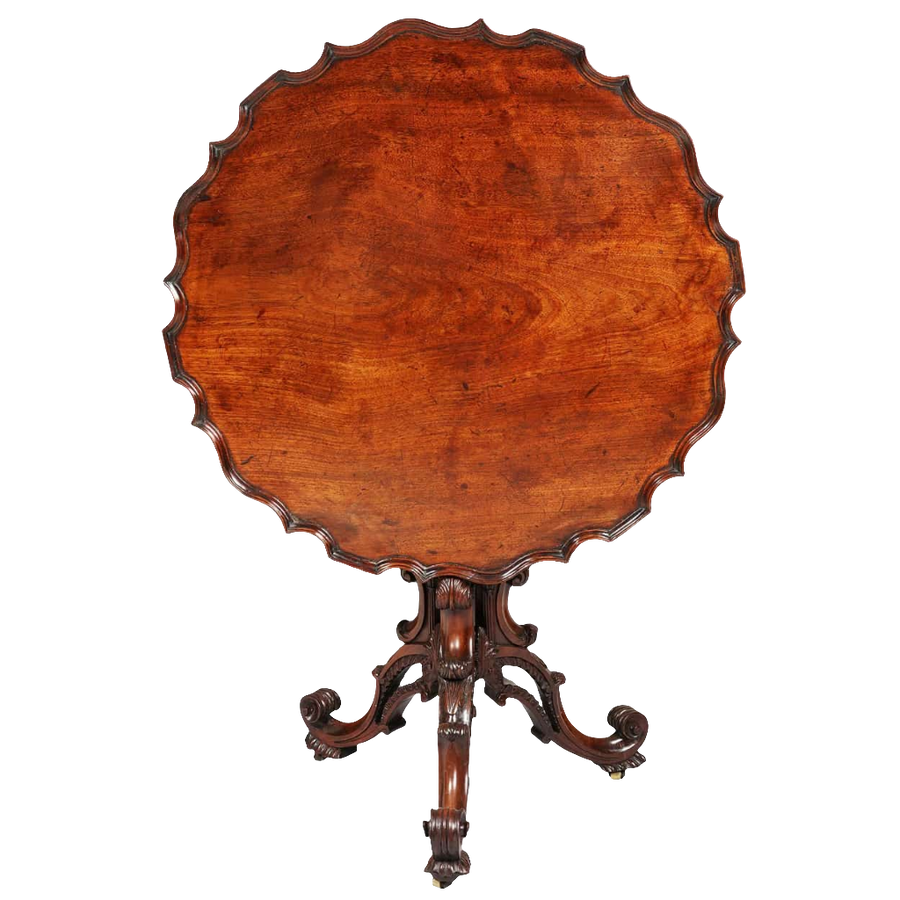
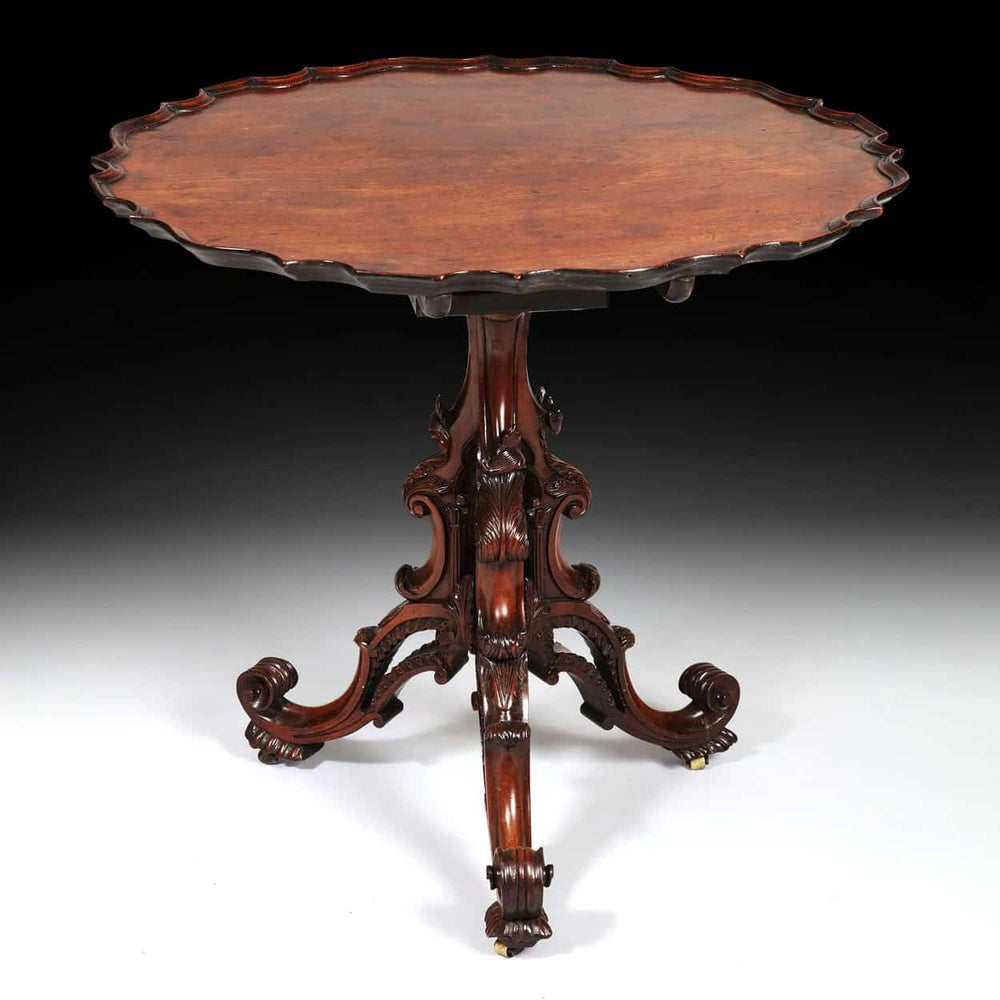
Case furniture gives a drawing room substance. An elegant console beneath a mirror offers a stage for lamps, bronzes and flowers. A commode brings useful concealed storage while presenting a generous surface for objects. A centre table, especially one with a strong marble top, inlay or carved base, can organise a larger room when there is sufficient circulation around it.
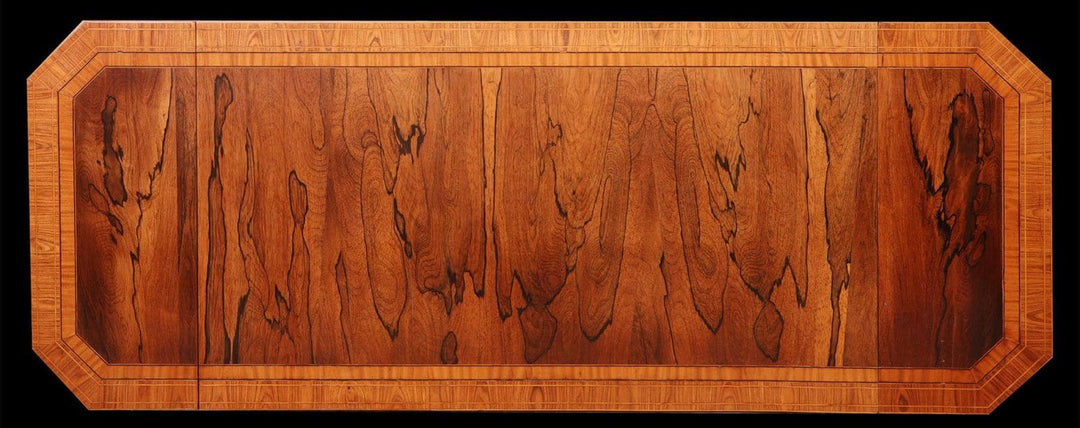
The choice depends on how formal the room should feel. A serpentine-fronted Georgian commode introduces softness and movement; a French Empire console, with its more emphatic mounts and disciplined profile, delivers drama. For rooms with restrained architecture, a beautifully figured mahogany or kingwood piece may provide depth without excessive ornament.
Lighting that holds the ceiling and the table
Antique lighting has an effect few other objects can match. A chandelier sets the room’s vertical scale, drawing the eye upwards and giving an otherwise plain ceiling a centre. Cut-glass chandeliers bring sparkle, while gilt-bronze, tole and carved giltwood examples offer a warmer, more sculptural presence.
The proportions must be judged from the floor rather than by dimension alone. A low-hung chandelier can make a room intimate, but it must not interrupt sightlines or conversation. In a room with low ceilings, a pair of antique wall lights or candelabra may be more persuasive than an oversized central fitting. Electrical conversion should be discreet and undertaken without compromising the object’s integrity.
Clocks, bronzes and objects with a story
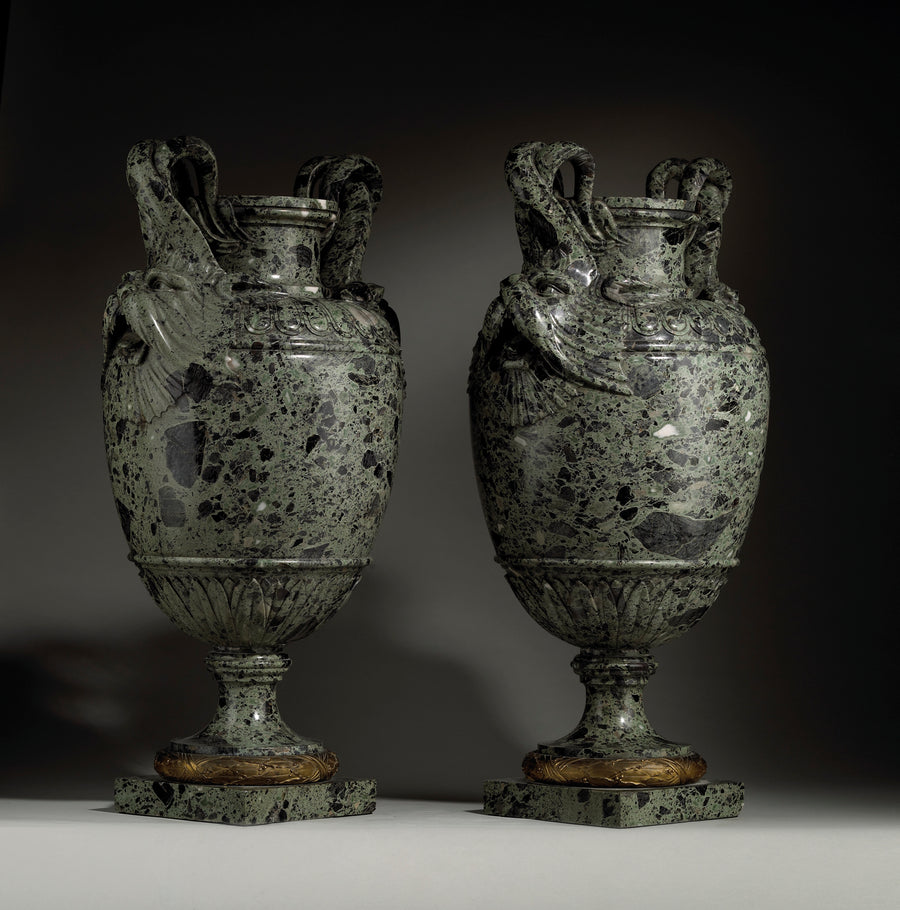
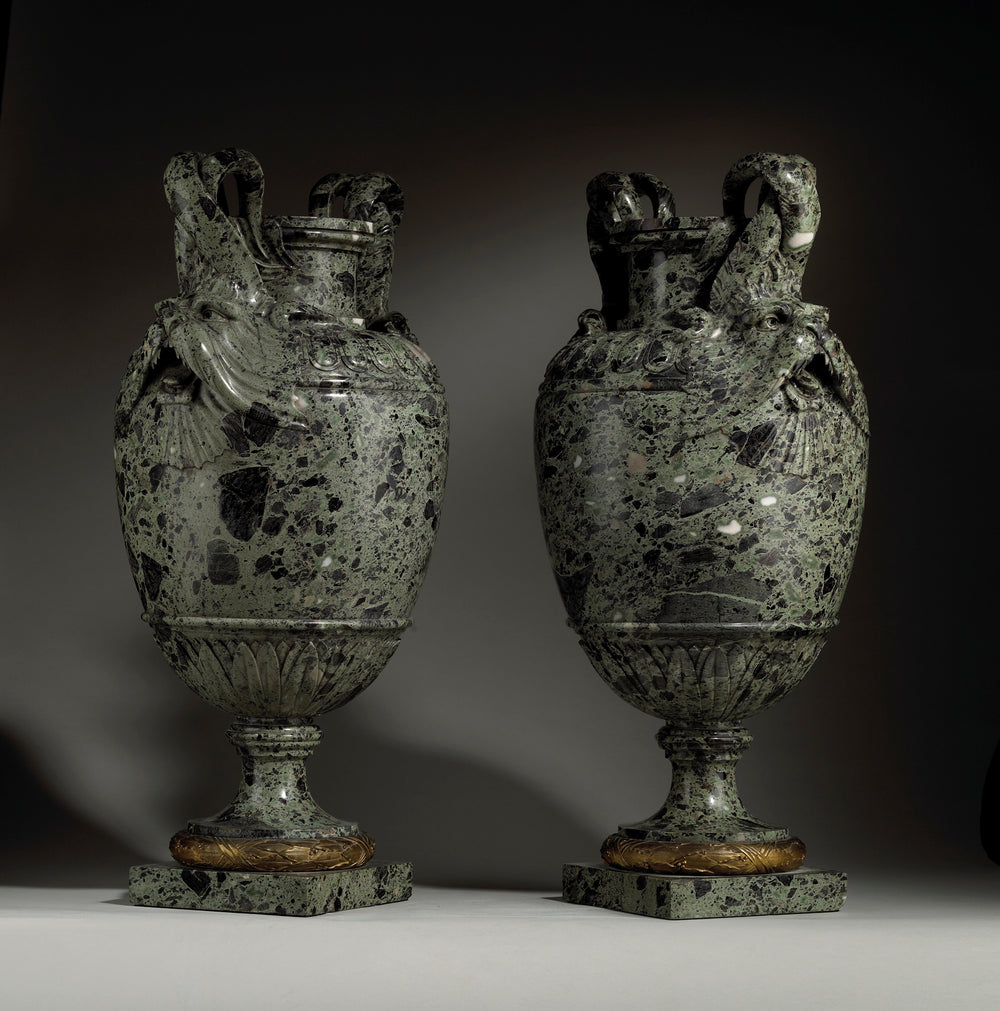
The smaller antiques are where connoisseurship becomes visible. A fine mantel clock, a pair of French bronze figures, a Grand Tour specimen, a lacquer box or an architectural fragment can create moments of discovery. These objects are especially effective on a console, commode or library table, where they can be appreciated at close range.
Restraint is vital. One important clock with well-chosen candlesticks will often make a stronger impression than a crowded mantelpiece. Group objects by material, form or subject, but allow each piece enough space to be understood. A drawing room benefits from a little mystery, not constant visual explanation.
Choose periods that converse rather than match
A room need not be faithful to a single date. Some of the most convincing interiors bring together English Georgian furniture, a French mirror and Italian or Grand Tour decorative objects. What matters is a shared language of scale, finish and quality. A restrained neoclassical commode may sit comfortably beneath a more elaborate giltwood mirror if both have clarity of line and sufficient presence.
There are, however, combinations that require care. Highly ornate Rococo furniture, heavily patterned textiles and elaborate chandeliers can compete if introduced in equal measure. In such rooms, let one element lead and keep the rest quieter. Similarly, a dark, substantial walnut cabinet may need pale walls, reflective surfaces or lighter upholstery to prevent the room from becoming visually heavy.
Contemporary art can be an excellent companion to period furniture. Its clean visual language often sharpens the profile of an antique rather than diminishing it. The relationship works best when neither is treated as a novelty: a serious painting above a serious console is more compelling than an antique used merely as a decorative contrast.
Provenance, condition and the value of proper restoration
For important antiques, beauty should be supported by knowledge. Provenance, attribution, period, materials and condition all influence both long-term value and confidence in the acquisition. Signs of age are not automatically faults. Old repairs, mellowed surfaces and minor irregularities may be consistent with a piece’s history, provided they are stable and honestly understood.
What should give pause is structural weakness, indiscriminate replacement, altered proportions or restoration that has erased the character of the object. A drawing-room chair must be safe to use; a commode’s drawers should operate well; a chandelier must meet modern electrical requirements. Yet restoration should preserve original fabric wherever practical, not make an eighteenth-century piece appear newly made.
Private consultation is particularly valuable when purchasing remotely or assembling a room across several acquisitions. Accurate measurements, detailed condition assessment and a clear understanding of finish can prevent costly mistakes. At Nicholas Wells Antiques, this level of scrutiny is central to presenting authenticated pieces that can be placed with confidence in a considered interior.
Place antiques as part of a lived-in room
The final distinction lies in placement. Avoid pushing every object to the perimeter. Float a pair of chairs where they invite conversation, use a centre table when the room permits it, and give a beautiful cabinet or console a wall where it can be seen in full. Lamps should create pools of warmth rather than rely on a single overhead source.
A drawing room becomes memorable when each antique appears inevitable: the mirror amplifying the light, the chair offering comfort, the clock marking time quietly from the mantel. Choose fewer pieces, choose them well, and allow their craftsmanship the space to speak.


Leave a comment