



English Country House Antiques Explained
There is a marked difference between a room furnished with old things and one shaped by genuine English country house antiques. The former may feel decorative. The latter carries atmosphere, hierarchy, craftsmanship and the quiet assurance that comes only from pieces made to endure generations of use.
For collectors and interior designers, that distinction matters. Country house taste is not a single period style, nor is it merely shorthand for mahogany, needlework and a few sporting pictures. It is an interior tradition formed by inheritance, travel, adaptation and an instinct for placing exceptional objects in rooms intended to be lived in. At its best, it feels cultivated rather than contrived.
What defines English country house antiques?
English country house antiques are best understood not as a narrow category, but as a standard of furnishing. They include Georgian, Regency and Victorian furniture, important mirrors, lighting, clocks, works of art and decorative objects that would have sat naturally within a substantial English house. Some are distinctly English in manufacture. Others are Continental or Grand Tour in origin, acquired by travelled families and absorbed into the broader decorative language of the house.
The key point is context. A giltwood mirror can be a fine antique in its own right, but in a country house setting it also performs architecturally, catching light above a chimneypiece or balancing the scale of panelling. A chest of drawers is not simply storage. It contributes line, proportion and material depth. Good country house antiques are rarely isolated gestures. They are part of a carefully weighted composition.
This is why serious buyers tend to look beyond labels. “Georgian” alone tells you very little about quality. One piece may be well-drawn, beautifully figured and original in surface. Another may be ordinary, heavily altered or over-restored. The country house tradition rewards connoisseurship because the difference between decorative age and lasting importance can be considerable.
The qualities that give these pieces authority
A convincing country house interior depends on three things: scale, substance and patina. The finest antiques in this tradition possess all three.
Scale is often overlooked by inexperienced buyers. English country houses were built with generous ceiling heights, broad circulation spaces and large windows, so their furniture was designed to hold a room. Console tables have presence. Library tables are broad and confident. Chandeliers were intended to command attention rather than disappear into the architecture. In a modern house, these proportions can be immensely effective, but they must be chosen with care. A grand object in a modest room can feel thrilling or oppressive, depending on the relationship of size, light and surrounding furnishings.
Substance comes through materials and making. Dense mahogany, lustrous walnut, finely cast bronze, carved giltwood and hand-cut glass all contribute a sense of permanence. There is usually an honesty to the construction of period furniture that modern reproductions cannot quite replicate. Drawer linings, secondary timbers, joinery, carving depth and the weight of bronze mounts all tell their own story.
Patina is the most elusive quality and often the most valuable. It is not damage, nor is it neglect. Proper patina is the visual record of age, handling and maintenance. It softens a polished surface, enriches leather, settles gilding and gives carved timber an ease that cannot be manufactured convincingly. Poor restoration can strip this away in an afternoon. Sensitive restoration preserves it.
Furniture, lighting and objects in the country house scheme
Furniture forms the backbone of the look, but the rooms that linger in memory are rarely furnished by case pieces alone. Lighting, mirrors and decorative objects are what give country house interiors their complexity.
A fine chandelier or pair of wall lights can change the entire reading of a room, particularly in Britain where natural light is often subdued. Mirrors multiply that effect while adding architectural structure. Clocks, candelabra, boxes and sculptural objects provide punctuation. They prevent a room from becoming merely furnished and make it feel collected.
There is also a welcome breadth to the category. A restrained George III chest may sit beautifully with a more theatrical Continental mirror or an unusual Grand Tour bronze. Country house taste has never been doctrinaire. It values judgement over rigid matching.
Why provenance and authentication matter
At the upper end of the market, buyers are not simply acquiring atmosphere. They are acquiring history, craftsmanship and, often, scarcity. That is why provenance and authentication are not optional refinements. They are central to value.
Provenance may range from a documented country house collection to a known workshop, exhibition history or family descent. Not every worthy object comes with a romantic paper trail, but where evidence exists it can sharpen both significance and confidence. It may explain unusual quality, original purpose or later alterations.
Authentication is equally important. Country house antiques have long been copied, adapted and improved. Some interventions are expected in objects that have survived two or three centuries. Others materially affect desirability. Replaced handles, reduced legs, re-gilded surfaces or married elements are not always disqualifying, but they must be recognised and judged proportionately.
For collectors furnishing seriously, the right dealer does more than describe age and style. He or she should be able to discuss condition candidly, distinguish restoration from reinvention and explain why a piece deserves its place in a sophisticated interior. That level of scrutiny is especially important when buying remotely.
How to buy English country house antiques well
The strongest collections and interiors are usually built slowly, with discrimination. Buyers who acquire well tend to begin not with a complete “look”, but with a standard.
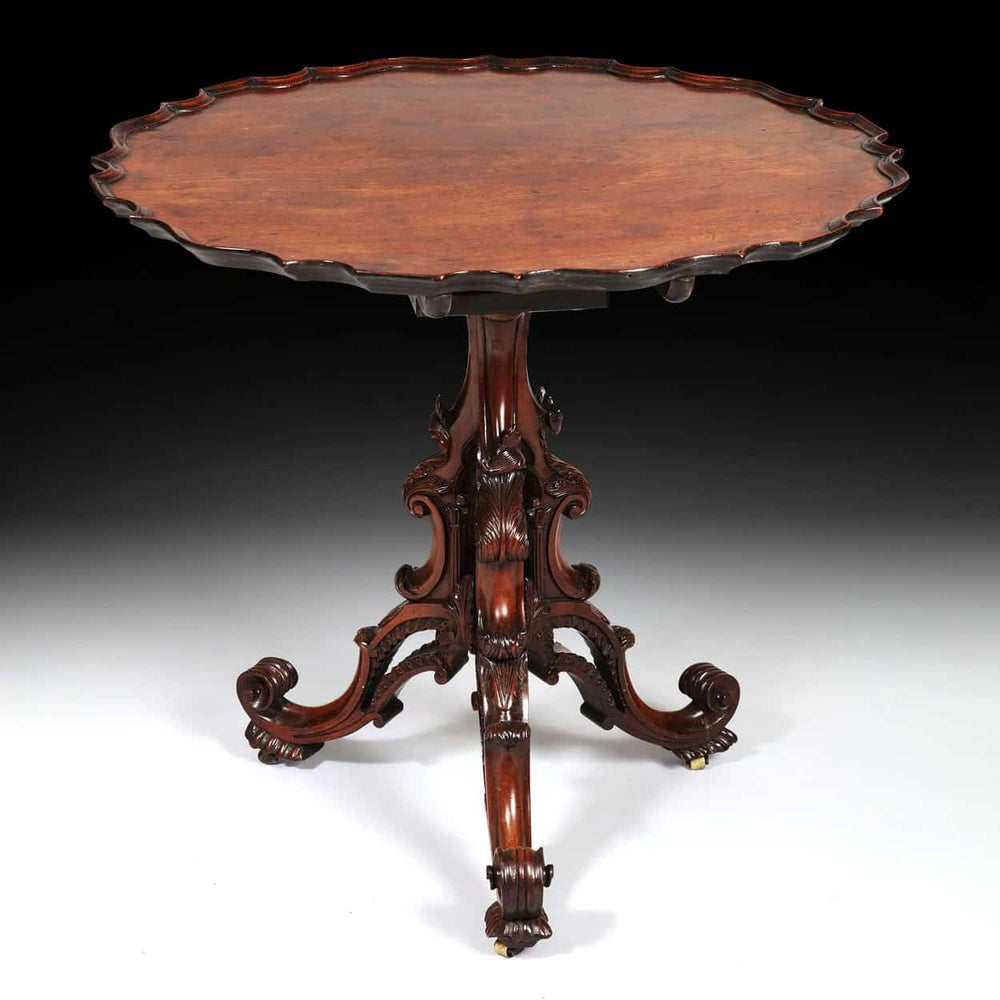
Start with pieces that anchor a room. A compelling centre table, a pair of large mirrors, an exceptional secretaire, a lantern of architectural scale or a library table with real authority will do more for an interior than a dozen smaller fillers. Once those principal notes are established, secondary objects can be selected with greater clarity.
Condition should be assessed in relation to rarity and intended use. A rare mirror with minor age wear may be more desirable than a perfectly bright example that has been aggressively restored. Likewise, a library table expected to withstand regular use may require practical restoration that would be judged differently on a purely sculptural object. It depends on category, significance and setting.
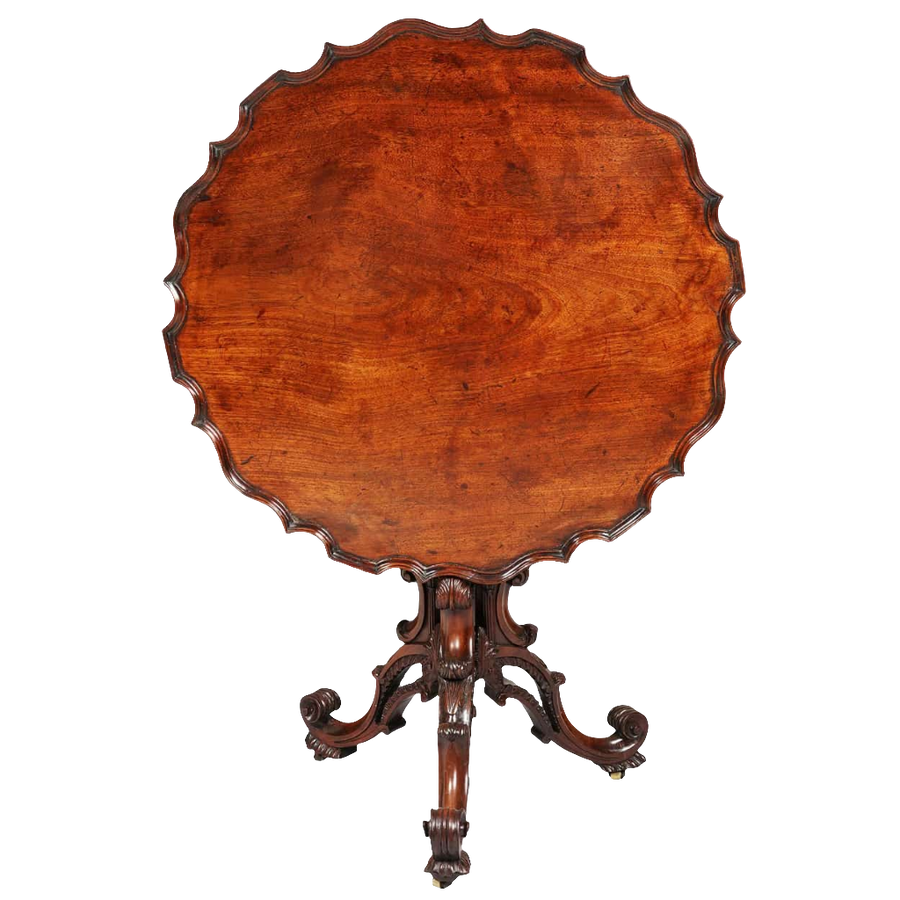
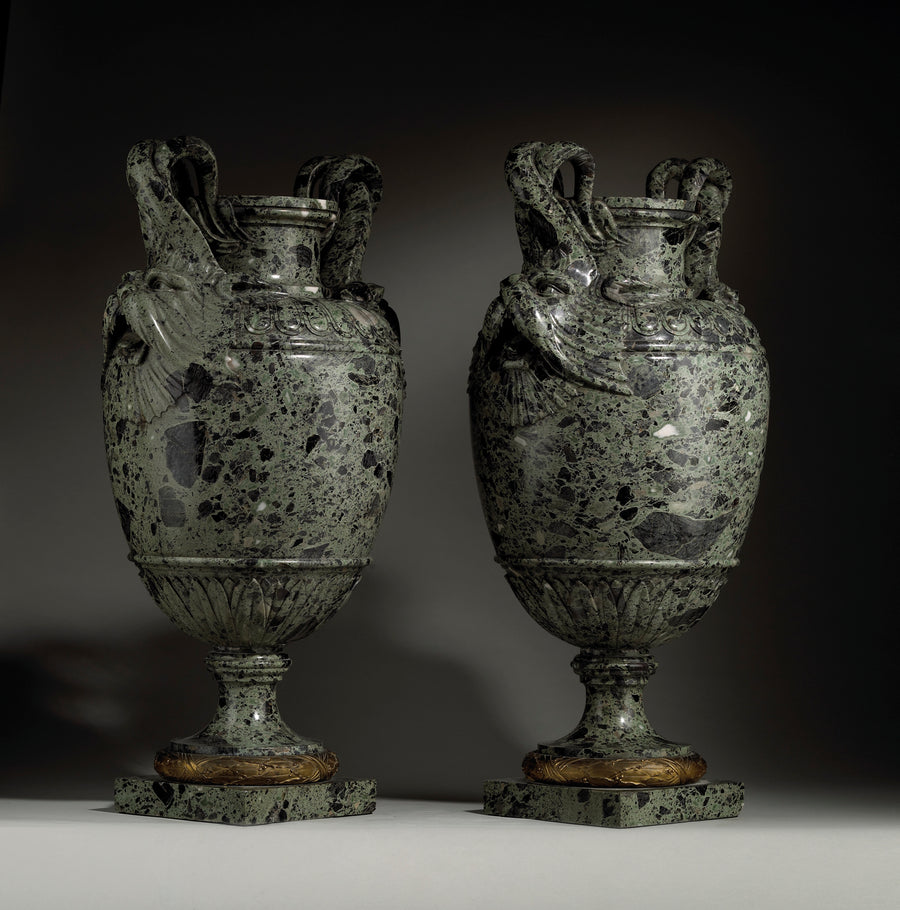
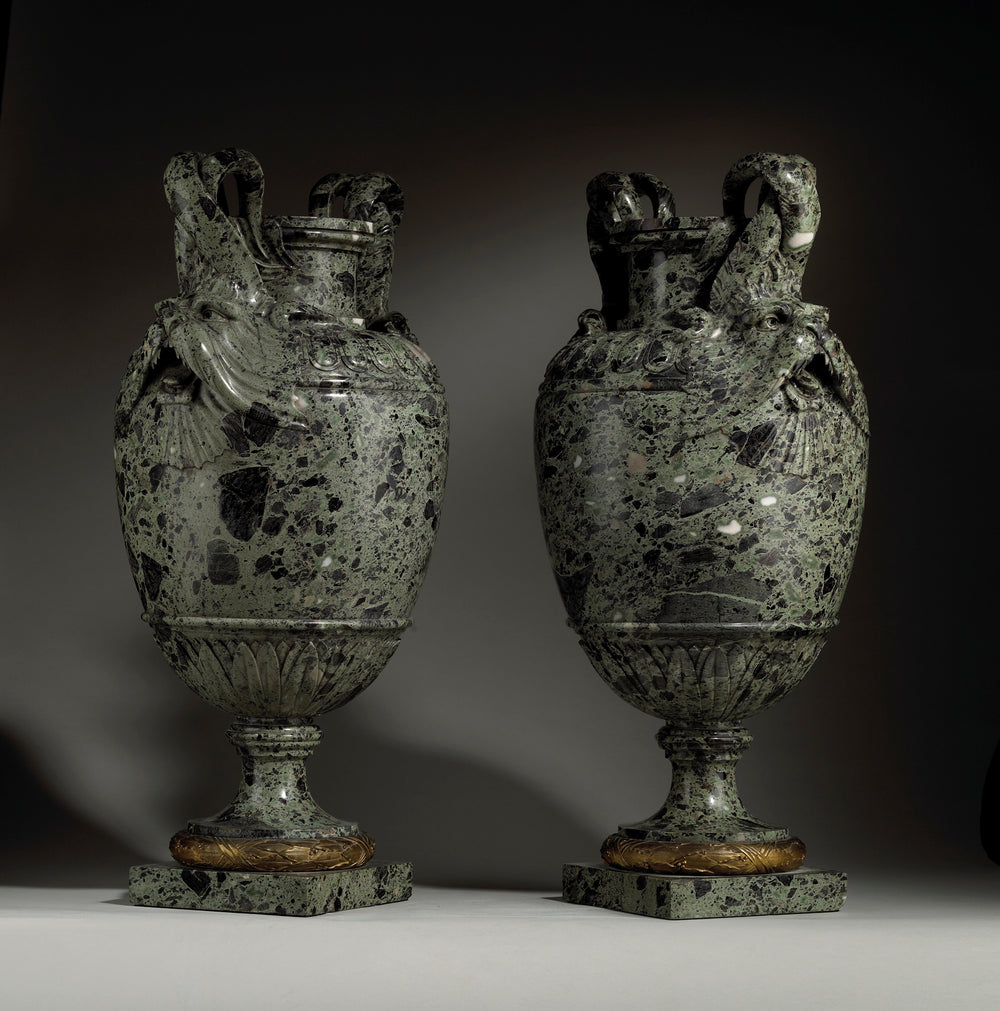
Designers often ask how strictly one should adhere to English material. The answer is not entirely. Country house rooms have historically welcomed foreign objects, provided they earn their keep visually. A French bronze, an Italian specimen marble table or a Grand Tour urn can feel entirely at home among English furniture when scale and quality are right. What matters is not national purity, but decorative intelligence.
Common mistakes at the decorative end of the market
The most frequent error is buying for effect without regard to calibre. Decorative age can be charming, but if every piece is chosen only for surface character, the room risks becoming mannered. One or two genuinely strong objects will often elevate simpler supporting pieces more effectively than a room full of middling antiques.
Another mistake is over-polishing the scheme. Country house interiors depend on tonal variation and a degree of informality. If every timber glows at the same intensity and every brass element gleams identically, the room begins to lose depth. Contrast matters. So does restraint.
Lastly, there is the temptation to buy reproduction furniture for convenience and antique objects for accent. Sometimes that works. Often it leaves the room divided against itself. An authentic period piece has a weight of line and surface that exposes weaker neighbours. Better to buy fewer, better things and allow them space.
English country house antiques in modern interiors
One reason these antiques remain so relevant is that they bring gravity to contemporary rooms without making them feel staged. A clean architectural envelope can benefit enormously from a George III commode, a set of carved candlesticks or a large gilt mirror. The dialogue between old and new gives each greater clarity.
That said, success depends on proportion and confidence. A single important object in a sparse room can appear isolated if there is no supporting material richness around it. Equally, a heavily layered decorative approach can overwhelm a modern house that needs more air. The answer lies in editing, not formula.
Collectors and decorators with the best results usually think in terms of tension: polished against worn, formal against relaxed, English against Continental, architectural scale against intimate detail. Country house taste has always accommodated that sort of balance because it evolved over time rather than arriving all at once.
For clients seeking that level of distinction, a specialist dealer offers more than stock. The real value lies in selection, scholarship, restoration judgement and the ability to place a piece within a broader decorative vision. That is particularly true in an international market, where trust and exacting presentation matter as much as beauty.
The appeal of English country house antiques is ultimately this: they make rooms feel older, wiser and more assured than they would otherwise be. Buy with patience, insist on quality, and let each piece contribute not just decoration but character that deepens with every passing year.


Leave a comment