



Buying Antique Sculpture for the Home: A Connoisseur’s Guide
The Allure of Antique Sculpture in the Luxury Residence
In the grand tradition of the English town and country house, sculpture serves a role far beyond mere decoration; it is a focal point, a narrator of history, and a testament to enduring artistic vision. A singular bronze or marble figure possesses the unique ability to anchor a room, commanding attention with its silent, powerful presence. Unlike fleeting decorative objects, a museum-quality work of art introduces a profound sense of permanence and connoisseurship. It is this quality that allows an 18th or 19th-century piece to bridge the gap between historical architecture and modern luxury, infusing a contemporary space with the “soul” of a bygone era. These works resonate not just for their aesthetic beauty, but for the centuries of history they embody.
The Narrative Power of 18th and 19th-Century Works
The late Georgian and Regency periods, in particular, produced some of the most sought-after sculpture for the discerning collector. This was an age defined by intellectual curiosity and aesthetic refinement, heavily influenced by the cultural pilgrimage of the Grand Tour. Young English aristocrats returned from Italy and Greece with not only a newfound appreciation for classical antiquity but also with crates of bronze and marble treasures. The scholarly appeal of a piece with a documented history lies in its ability to offer a tangible connection to these historical moments and the discerning individuals who first commissioned or acquired it. This provenance transforms an object into a cultural artefact, rich with stories and significance.
Sculpture as an Investment in Heritage
While contemporary furnishings may follow the transient tides of fashion, a truly rare and exceptional work of art often maintains or appreciates in value, representing a tangible investment in cultural heritage. The acquisition of such a piece is a reflection of the owner’s connoisseurship—a discerning eye for quality, history, and form. To select a sculpture is to choose a legacy, an object of enduring beauty that will captivate for generations. The finest examples from our collection represent this union of artistic merit and historical importance, offering a unique opportunity to own a piece of history.
Explore the curated collection of fine antique sculpture at Nicholas Wells Antiques.
Evaluating Quality: Material, Patina, and Provenance
A connoisseur’s evaluation of antique sculpture begins with a deep understanding of its physical and historical characteristics. There is a clear hierarchy of materials, with cast bronze and carved marble representing the zenith of artistic achievement, followed by the more delicate terracotta and the ornate brilliance of ormolu. However, beyond the medium itself, it is the “original surface” that remains the most critical factor for serious collectors. The hallmarks of expert craftsmanship in 18th-century French and English works are evident in the precision of the casting, the masterful carving, and the intricate chasing. Learning to read a sculpture—to identify the subtle signs of authentic age versus the harsh uniformity of a modern reproduction—is an essential skill in acquiring pieces of true distinction.
The Importance of Surface Patina
Patina is more than an incidental surface layer; it is the conservation of history on bronze and marble. Developed over centuries through gentle handling, exposure to the atmosphere, and careful waxing, this complex surface tells the story of the object’s life. It is an irreplaceable attribute that imparts depth, colour, and a sense of antiquity. For this reason, over-restoration can be catastrophic, stripping a work of art of its historical integrity and, consequently, its value. The mellowed glow of 19th-century French giltwood, for instance, possesses a soft, nuanced lustre that cannot be replicated, a testament to the original gilder’s craft and the gentle passage of time.
Decoding Provenance and Authenticity
Provenance—the documented history of an object’s ownership—is paramount. Researching the history of a piece through gallery records, auction catalogues, and collection markings can elevate a beautiful object to one of significant historical importance. A luxury antiques dealer plays a crucial role in this process, leveraging expertise and industry connections to verify the authenticity of rare objects. Reputable London dealers have long been central to the global market, their endorsement serving as a hallmark of quality and a guarantee of an object’s merit, providing collectors with the confidence needed to acquire important works.

Defining Eras: From Grand Tour Bronzes to Regency Marble
The story of domestic sculpture is intrinsically linked to the great design movements of the 18th, 19th, and early 20th centuries. Each era brought its own distinct aesthetic, from the classically inspired souvenirs of the Grand Tour to the streamlined elegance of Art Deco. Understanding these stylistic shifts is key to curating a collection that is both historically coherent and visually compelling.
- The Grand Tour: This 18th-century tradition brought the classical world into the English home, popularising bronze reductions of famous ancient sculptures, architectural models of Roman ruins, and elegant marble obelisks and busts.
- Regency Elegance: The early 19th century saw a refinement of English sculpture, with a focus on neoclassical purity of line and form, often executed in pristine white marble.
- French Giltwood and Ormolu: The 1800s marked the height of Continental decorative art, with Parisian artisans producing exquisitely detailed gilt-bronze (ormolu) mounts and finely carved giltwood figures that adorned the most fashionable interiors.
- Art Deco and Beyond: The early 20th century witnessed a transition to streamlined, stylized forms in bronze, stone, and other materials, reflecting a modern sensibility that broke decisively from historical precedents.
The Grand Tour and Classical Souvenirs
The 18th-century English aristocrat, educated on a diet of classical literature, sought to recreate the grandeur of Rome and Athens within his own home. This desire shaped the market for bronze and marble models of iconic works like the Venus de' Medici or the Laocoön Group. These pieces were not mere copies but were considered essential components of a scholarly interior. Incorporating Grand Tour objects such as miniature ruins or architectural models into a library or study remains a timeless way to evoke an atmosphere of classical learning and refined taste.
English and Continental Furniture Integration
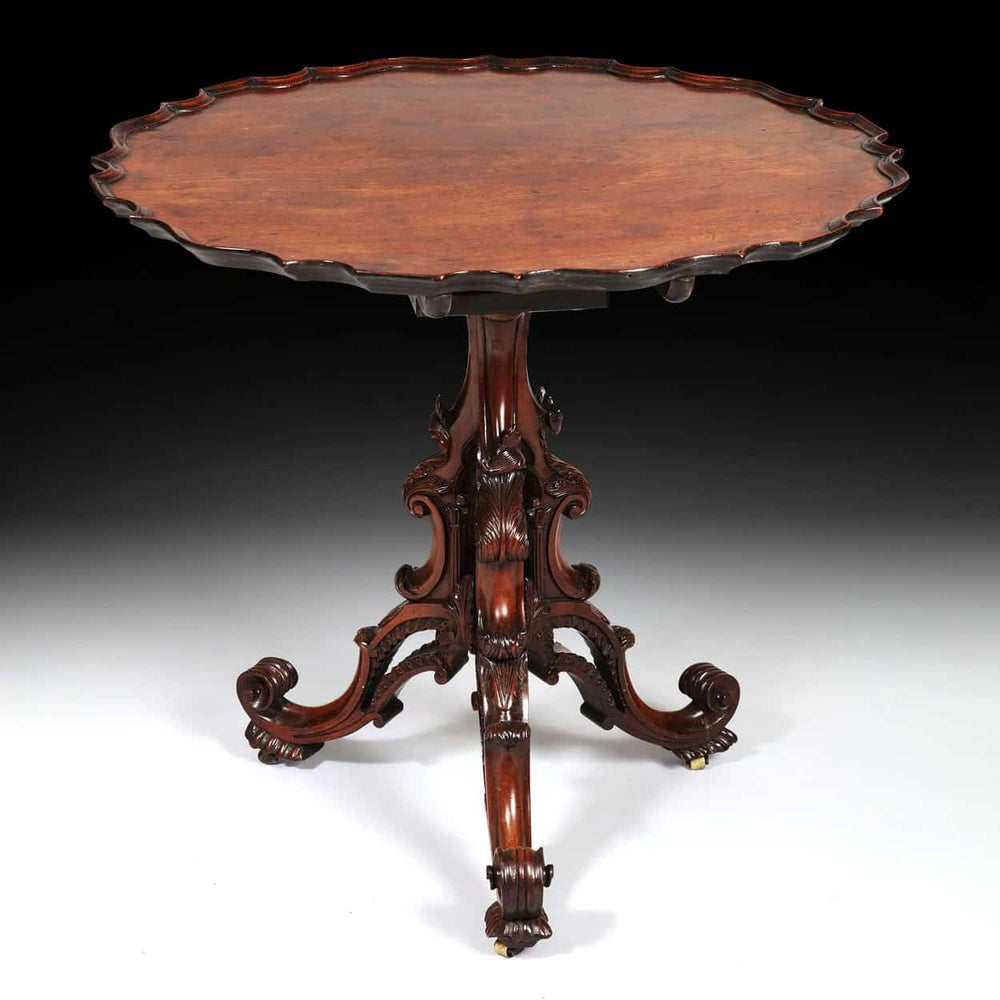
A fine sculpture achieves its full potential when placed in dialogue with equally exceptional furniture. Pairing a classical bust with a Georgian mahogany sideboard or a Regency bronze with a fine rosewood console creates a cohesive and historically rich vignette. The influence of French design on English decorative tastes during the 19th century was profound, leading to a sophisticated blend of styles. Whether complementing the architectural lines of a Thomas Chippendale cabinet or providing a historical counterpoint to the sleek geometry of an Art Deco piece, sculpture adds a vital layer of texture and narrative to an interior.
Strategic Placement: Integrating Sculpture into Interior Design
The art of placing sculpture is one of balance, scale, and drama. A well-positioned piece can transform an entire space, creating a powerful focal point that draws the eye and invites contemplation. On an antique centre table in a grand entrance hall, a significant bronze can make an immediate and lasting impression. For larger works, the art of the pedestal is essential, elevating a piece to eye level and giving it the prominence it deserves. Lighting is another critical consideration; carefully directed light can highlight the complex texture of a bronze patina or the subtle translucence of marble, revealing the full mastery of the artist’s hand.
Sculpture on Tables and Cabinets
The perfect pairing of sculpture and furniture can create a moment of pure design harmony. Placing a rare bust atop a Regency console table or a fine animalier bronze on a side cabinet introduces a third dimension of artistic expression. When arranging objects on an antique desk or commode, it is crucial to balance height and mass, allowing the sculpture to command its space without overwhelming its surroundings. This thoughtful curation transforms a surface from a mere platform into a composed still life.
Designing for the American Luxury Home
The principles of English collecting and design translate seamlessly to the scale and style of the American luxury home. The classical aesthetics that grace a London town house can be adapted to bring historical depth to a residence in the Hamptons or Greenwich, Connecticut. In a contemporary San Francisco interior, a single, powerful 18th-century sculpture can add what designers call “historical gravity,” grounding the space with a sense of time and artistry. Similarly, in a grand room of a Texas estate, a large-scale bronze or marble figure can become a magnificent conversation piece, its timeless elegance commanding the expansive space with authority and grace. For any collector, the use of antique pedestals can be a transformative tool for achieving the perfect presentation.
The Acquisition Process with Nicholas Wells Antiques
Acquiring fine antiques requires trust, expertise, and a seamless process. Navigating our online gallery allows you to buy with confidence, supported by detailed photography, scholarly descriptions, and our unwavering commitment to quality. While our expertise is rooted in the heart of London's historic art market, our gallery operates globally, serving a discerning clientele from New York to California. The Nicholas Wells promise extends to every piece we sell, with complimentary restoration and expert preservation ensuring your acquisition arrives in impeccable condition, ready to be enjoyed for generations.
Professional Fine Art Shipping and Logistics
For our American and global clientele, we have perfected the art of international delivery. We exclusively use specialized fine art shippers for all transatlantic deliveries, ensuring that every object is handled with the utmost care from our door to yours. Our fully insured worldwide shipping provides complete peace of mind, whether the destination is a Manhattan apartment or a Californian villa. Fragile marble and bronze works are subject to a meticulous process of custom crating, a bespoke service designed to protect these irreplaceable treasures during their journey.
A Personal Approach to Connoisseurship
We believe that collecting is a journey, best undertaken with a trusted guide. Building a relationship with a fine antiques dealer allows for a more personal and rewarding experience, providing access to new acquisitions and expert advice tailored to your long-term collecting goals. We regularly assist leading interior decorators in sourcing specific, unique works of art to complete their most ambitious projects. We invite you to begin a conversation with us and discover the perfect piece to elevate your collection.
Enquire about our current collection of rare antique sculptures.


Leave a comment